
Houthis Retake Dhubab Near Bab al-Mandab as Yemeni Forces Withdraw Toward Aden
Iran-aligned Houthi forces have regained strategic territory near Yemen's Bab al-Mandab Strait after Saudi-backed government forces withdrew from Dhubab and surrounding coastal positions. The retreat marks a major reversal for the government offensive launched in October and gives the Houthis renewed leverage over a vital global shipping corridor connecting the Red Sea with the Gulf of Aden.
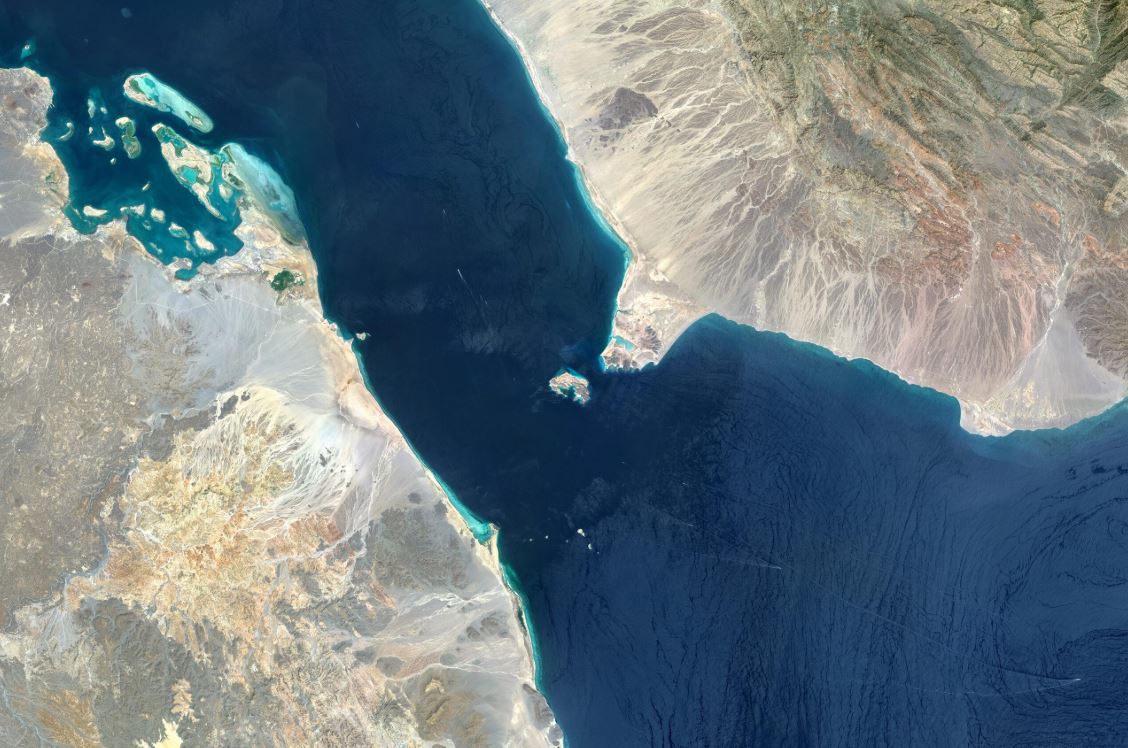
Houthi forces have retaken territory around Dhubab near Yemen's strategic Bab al-Mandab Strait following the withdrawal of Saudi-backed government troops toward Aden, according to reports of the latest fighting. The development threatens to alter the military balance along Yemen's Red Sea coastline and raises concerns about international shipping through one of the world's most important maritime chokepoints.
The withdrawal comes barely six weeks after government forces launched a counteroffensive to reverse Houthi gains along Yemen's western coast. It also places renewed pressure on one of the world's most strategically important maritime corridors at a time when conflict across the Middle East has already disrupted energy supplies, commercial shipping and regional security.
Saudi-Backed Forces Withdraw From Dhubab
The Southern Armed Forces, a major military formation aligned with Yemen's internationally recognized government, announced that troops were being redeployed from Dhubab Airport and surrounding positions near the Bab al-Mandab Strait.
The force described the withdrawal as a strategic redeployment intended to strengthen defenses around Aden and neighboring southern governorates.
Aden has served as the principal seat of Yemen's internationally recognized government since the Houthis seized Sanaa and forced government leaders from the capital more than a decade ago.
According to Reuters, government forces have repositioned around al-Suqyah, south of Dhubab, while continuing operations against Houthi positions in nearby coastal areas.
The retreat leaves the Houthis with greater influence over territory overlooking the southern entrance to the Red Sea.
However, control of coastal positions should not be confused with complete military control over international shipping through the strait. The ability to restrict maritime traffic depends on the deployment of weapons, surveillance capabilities and operational conditions at sea.
How the Houthis Regained the Coastal Territory
The latest developments follow several months of renewed fighting across Yemen.
In September, Houthi forces advanced along the western coastline, capturing territory near Bab al-Mandab and challenging government positions that had previously helped secure the maritime approaches.
Saudi-backed forces responded with a counteroffensive in early October, announcing the recapture of Dhubab and several strategic coastal positions.
The October operation temporarily pushed Houthi fighters away from sections of the strait and appeared to restore government influence over a crucial coastal corridor.
But the offensive failed to eliminate the broader Houthi threat.
The Houthis retained substantial military capabilities and continued applying pressure across several fronts, particularly around Taiz and the highland approaches toward southern Yemen.
By mid-November, the government's coastal campaign had become increasingly difficult to sustain as its forces faced simultaneous threats to inland positions and Aden.
The November 15 withdrawal effectively reversed important gains achieved during the October counteroffensive.
Why Bab al-Mandab Matters to Global Trade
The Bab al-Mandab Strait connects the Red Sea with the Gulf of Aden and the wider Indian Ocean.
It forms the southern gateway to the Suez Canal route, one of the principal maritime links between Asia, Europe and the Mediterranean.
Commercial vessels transporting crude oil, petroleum products, manufactured goods and containerized cargo regularly transit this corridor.
Military instability around the strait can therefore have consequences far beyond Yemen.
Houthi control of nearby coastal positions increases the group's potential ability to threaten commercial vessels using missiles, drones and other maritime weapons.
Even without a formal closure of the waterway, the threat of attacks can influence shipping decisions.
Companies may divert vessels around Africa's Cape of Good Hope, increasing voyage distances, fuel consumption, insurance costs and delivery times.
The latest territorial changes also come amid wider regional disruption affecting the Strait of Hormuz, another strategically important maritime passage.
Pressure on both waterways could compound the challenges facing Gulf energy exporters and international shipping operators.
Saudi Arabia Faces a Growing Strategic Challenge
The withdrawal highlights the difficulties confronting Saudi Arabia and the Yemeni forces it supports.
Riyadh has backed the internationally recognized Yemeni government for years in its struggle against the Houthis, whose political and military relationship with Iran has made Yemen a significant theater of regional competition.
The latest setback demonstrates the limits of a military strategy that must defend widely separated positions against a force capable of conducting ground offensives while also launching missile and drone attacks.
Saudi Arabia has faced renewed attacks on airports, ports and energy infrastructure during the latest escalation.
The kingdom has responded with strikes against Houthi positions in Yemen.
Yet the conflict presents a difficult strategic dilemma.
Concentrating forces around Aden could help defend the government's principal southern base, but withdrawing from the western coast risks allowing the Houthis to consolidate positions overlooking international shipping lanes.
Attempting to defend both fronts simultaneously would require substantial military resources and effective coordination among the different factions aligned with the Yemeni government.
The situation underscores how Yemen's fragmented anti-Houthi coalition remains vulnerable to pressure across multiple battlefronts.
Is Aden the Houthis' Next Objective?
The decision to redeploy forces toward Aden reflects growing concern over the security of the southern city.
Houthi advances in the highlands south of Taiz have brought their positions closer to government-held territory in Lahj governorate.
Reuters reported that Houthi fighters were positioned near Tur al-Bahah, approximately 80 kilometers from Aden.
The development creates pressure on government defenses from inland approaches while the coastal retreat weakens positions farther west.
Nevertheless, a successful offensive against Aden is not inevitable.
The Houthis would still face substantial logistical, geographical and military obstacles, including government-aligned forces defending the southern approaches.
The ability of Saudi-backed forces to reorganize, reinforce defensive positions and maintain supply routes will be central to determining whether the latest Houthi gains develop into a broader southern offensive.
For now, the threat to Aden remains a serious strategic concern rather than a confirmed imminent takeover.
Taiz Becomes Central to the Wider Conflict
The battle around Taiz has become increasingly important to the military balance in Yemen.
The city lies in a mountainous region linking northern and southern areas of the country, making surrounding roads and highland positions strategically significant.
Houthi pressure around Taiz has complicated the movement of government forces and weakened efforts to maintain the coastal counteroffensive.
The fighting has also produced a severe humanitarian emergency.
According to Reuters, approximately 300,000 people have been displaced across Yemen during the latest escalation, with roughly half sheltering in or around Taiz.
Humanitarian access has deteriorated as fighting and restrictions obstruct the movement of aid supplies and civilians.
The renewed conflict threatens to deepen suffering in a country already affected by years of warfare, economic instability and widespread humanitarian needs.
Iran's Regional Leverage and the Red Sea
The latest developments have wider implications for the regional balance of power.
The Houthis' relationship with Iran provides Tehran with an important source of influence near the southern entrance to the Red Sea.
As regional tensions intensify, the group's position along Yemen's western coastline could increase pressure on Saudi Arabia and international maritime interests.
However, Houthi military decisions should not automatically be treated as direct Iranian orders. The movement has its own leadership, political objectives and military priorities within Yemen.
The strategic significance lies in the overlap between those objectives and Iran's broader regional interests.
For the United States and its partners, the renewed Houthi presence near Bab al-Mandab presents a difficult security challenge.
Protecting international shipping requires maritime surveillance, defensive capabilities and cooperation with regional governments.
But naval deployments alone cannot resolve the territorial conflict inside Yemen or remove the underlying threats to the coastline.
What Happens Next?
Three developments will determine whether the Houthi gains become a lasting strategic advantage.
The first is whether government forces can stabilize their positions south of Dhubab and prevent further advances toward Aden.
The second is whether the Houthis consolidate their control over the coastal territory and expand their ability to threaten maritime traffic.
The third is whether Saudi Arabia and its Yemeni allies can coordinate an effective response without further weakening defenses around Taiz and other contested areas.
A prolonged Houthi presence near Bab al-Mandab could increase the risks facing international shipping and complicate efforts to restore stability along Yemen's western coast.
For the Saudi-backed government, the immediate priority is preventing a tactical withdrawal from developing into a broader military collapse.
For the Houthis, the latest territorial gains offer an opportunity to strengthen their position both inside Yemen and in the wider regional confrontation.
The renewed battle for Yemen's coastline demonstrates how a local military setback can have consequences extending across the Red Sea, the Gulf and the global economy.
With fighting intensifying around Taiz and the approaches to Aden, the struggle for control of Bab al-Mandab remains one of the most consequential fronts in Yemen's renewed war.
Sources
Follow our reporting: Add Faultline Brief as a Preferred Source on Google →