Iran's Drone War Exposes US Military Bases: How American Defenses Became Vulnerable
New satellite imagery and military assessments reveal how Iranian drone and missile attacks damaged American bases across the Middle East, exposing weaknesses in air-defense systems and raising questions about the future of US military power in the Persian Gulf.
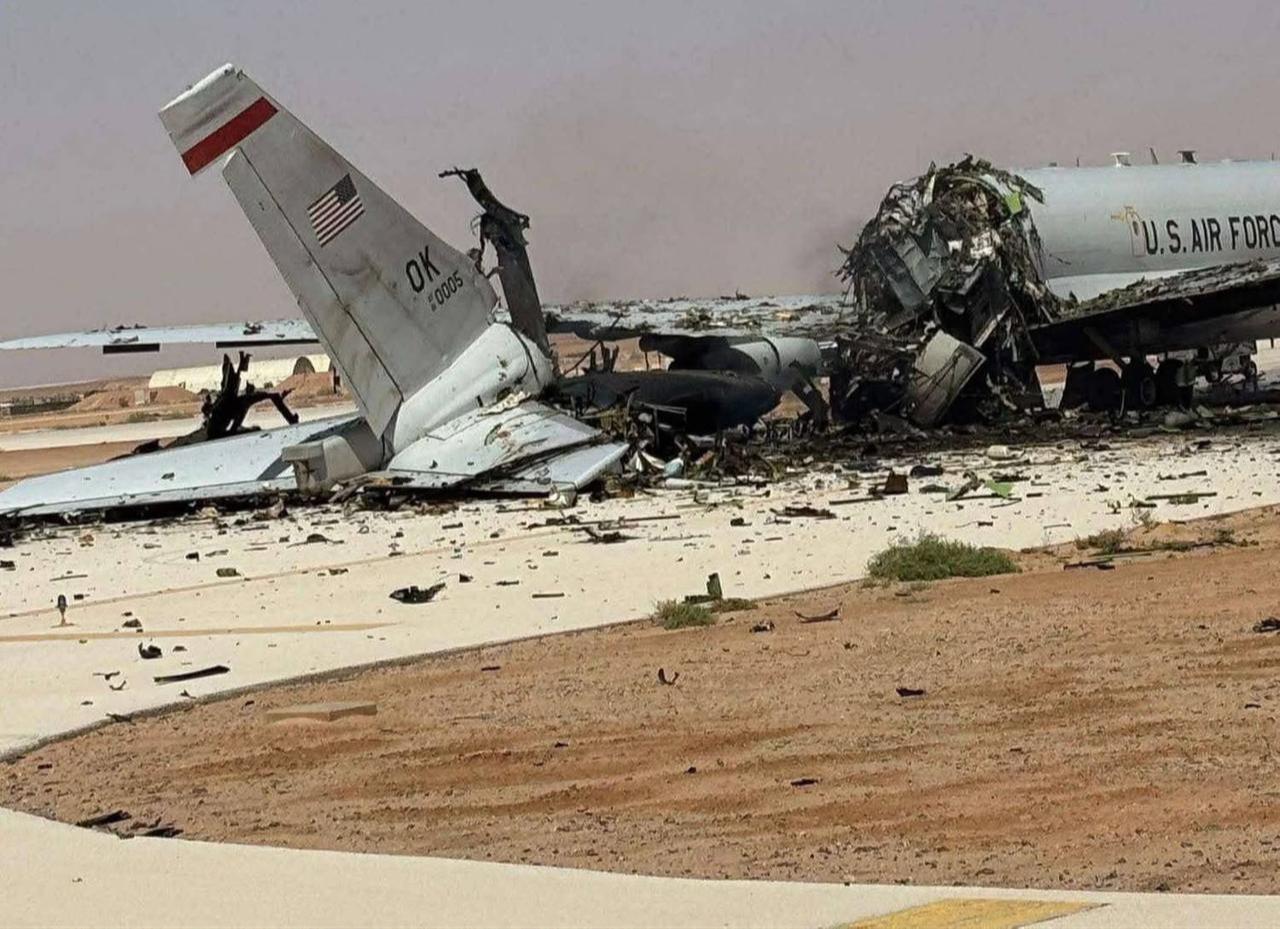
Iranian drone attacks on US military bases have exposed significant vulnerabilities in American defenses across the Middle East, challenging the assumption that Washington's advanced radar systems, air-defense networks and military installations can withstand sustained missile and drone warfare.
An Associated Press investigation published on October 31 found that more than 115 drone and missile strikes claimed by Iran or Iranian-backed groups damaged or destroyed structures at 26 military bases and other sites containing American equipment through August 2026. The findings suggest that Iranian forces were able to exploit vulnerabilities in US early-warning systems before inflicting further damage on aircraft, hangars, communications facilities and other infrastructure.
The revelations come at a critical moment. President Donald Trump is considering renewed military operations against Iran after the November 3 US midterm elections, while Gulf governments are pursuing diplomatic efforts to prevent another round of attacks.
The emerging picture raises a fundamental question for Washington: Can the United States continue relying on large, fixed military bases in a region where relatively inexpensive drones and missiles can threaten equipment worth billions of dollars?
Iran Attacks US Bases: What the Investigation Reveals
The Associated Press examined satellite imagery from multiple providers and interviewed four regional officials with knowledge of the damage sustained by American military facilities.
Its investigation identified damage from more than 115 Iranian or Iran-backed drone and missile strikes at 26 locations through August. The attacks affected military facilities and sites containing US equipment across the Middle East.
According to the findings, Iran's campaign involved more than indiscriminate strikes against American installations. The pattern suggested an effort to disrupt the systems that allow US forces to detect threats, coordinate defensive responses and sustain military operations.
Early-warning radars, air-defense equipment and aircraft hangars were among the initial targets. Subsequent strikes damaged warehouses, troop accommodations, communications infrastructure and other facilities.
The investigation also found extensive structural damage during the April-to-June period, illustrating how repeated attacks can degrade military infrastructure even when individual strikes do not completely disable a base.
The Pentagon has maintained that American forces remain capable of carrying out their missions. However, the documented damage highlights the difficulty of protecting numerous installations spread across a vast geographic area.
How Iranian Drones and Missiles Challenged US Air Defenses
The vulnerability of US military bases is closely connected to the changing economics of modern warfare.
American military protection in the Middle East depends on layered defenses that can include sophisticated surveillance radar, fighter aircraft, electronic warfare systems and missile interceptors.
These systems provide substantial protection, but they are not impenetrable.
Iran has invested heavily in ballistic missiles, cruise missiles and unmanned aerial vehicles as alternatives to matching American airpower directly. Such weapons allow Tehran to threaten regional targets without maintaining an air force comparable to that of the United States.
A sustained campaign can place enormous pressure on defensive networks.
Military planners must distinguish genuine threats from other aerial activity, maintain sufficient interceptor supplies and defend installations containing equipment that is difficult or expensive to replace.
Drones also create an unfavorable cost equation when inexpensive attacking weapons must be intercepted using far more costly defensive missiles.
The AP findings suggest that attacks on early-warning infrastructure may have compounded these problems by disrupting systems essential to detecting and responding to subsequent threats.
However, the investigation does not establish that every successful strike resulted from a failed interceptor or that all American defenses were disabled. The documented pattern is more specific: Iranian attacks damaged important defensive and operational infrastructure despite the presence of US military protection.
Radar Systems, Aircraft and Military Infrastructure Under Attack
Some of the most strategically important damage involved equipment that supports American air operations.
Radar installations provide advance warning of incoming threats, allowing commanders to activate defensive systems and coordinate responses. When these systems are damaged, the effects can extend beyond the equipment itself.
Aircraft hangars, maintenance facilities, fuel infrastructure and communications networks are similarly important.
An aircraft may survive an attack but become unavailable for operations if its maintenance facilities, supporting equipment or communications systems are damaged.
The AP investigation identified damage to aircraft, including refueling tankers and an E-3 surveillance aircraft, as well as significant damage to military buildings.
At Kuwait's Ali Al Salem Air Base, the investigation documented damage affecting at least 15 hangars. Camp Buehring also sustained extensive losses.
The consequences were not limited to infrastructure. Six American soldiers were killed in a March attack in Kuwait, underscoring the human cost of attacks on US installations.
The broader operational impact cannot be measured solely by counting destroyed buildings. Damage to logistical and command infrastructure can reduce a military force's effectiveness even when its combat units remain operational.
The Growing Cost of the Iran War for Washington
The financial consequences of the conflict are becoming increasingly significant.
A September report by Military Times, citing a Pentagon inspector general assessment, said Iranian strikes had damaged or destroyed hundreds of structures at US bases in Kuwait, Bahrain, Qatar, the United Arab Emirates, Saudi Arabia, Iraq, Oman and Jordan.
The report also described substantial aircraft losses and damage, while noting that the cost of rebuilding military infrastructure had not been fully determined.
More recently, Reuters reported on October 28 that the Pentagon's estimated cost of the Iran war had exceeded $47 billion.
That estimate included operational expenses, ammunition replacement and losses involving military equipment and platforms. It did not necessarily capture the full eventual cost of repairing damaged bases.
This creates a second strategic vulnerability: the financial burden of defending and rebuilding a military presence that remains exposed to future attacks.
For Washington, the problem extends beyond replacing destroyed equipment. Military leaders must determine whether damaged installations should be reconstructed, redesigned, relocated or protected through different defensive arrangements.
Those decisions could reshape American military spending and deployment priorities for years.
Why US Military Bases in the Persian Gulf Remain Vulnerable
The United States maintains military facilities and security partnerships across the Gulf to support regional operations, protect shipping routes, reassure allies and deter potential adversaries.
These installations provide strategic advantages, including established runways, logistical networks, communications systems and access to regional partners.
But their locations also create vulnerabilities.
Many bases are within reach of Iranian missiles and drones. Their fixed infrastructure is difficult to conceal or move quickly, and repeated attacks can threaten essential facilities even when defenses intercept a substantial proportion of incoming weapons.
According to the AP investigation, two regional officials said the United States had relocated numerous military assets away from the Persian Gulf following the damage.
Such movements may help reduce exposure, but they can also complicate operations by increasing distances between aircraft, support facilities and potential mission areas.
The challenge is particularly serious for Gulf countries that host American military facilities.
Their security partnerships with Washington are intended to strengthen national defense, yet those same relationships can make their territory vulnerable during a direct US–Iran confrontation.
That tension is one reason regional governments have intensified diplomatic efforts to prevent renewed fighting.
Could Another US–Iran Conflict Trigger Wider Regional Attacks?
The findings have immediate significance because the possibility of renewed American strikes remains unresolved.
Reuters reported on October 31 that Iranian representatives met Qatari mediators in Doha following lengthy discussions in Tehran. The talks were aimed at finding a diplomatic path away from renewed military confrontation.
Iranian officials have warned that another American attack could prompt retaliation against US and Israeli targets in neighboring countries.
For Gulf governments, the danger is that renewed conflict could bring another wave of attacks against military facilities, transportation networks and potentially wider infrastructure.
The exposure of American bases adds an important dimension to those concerns.
If Iran can impose significant costs on US military installations during prolonged hostilities, Washington must account for the possibility that escalation would involve damage not only to Iranian targets but also to American forces and regional partners.
The result is a more complicated deterrence environment in which both sides may retain the ability to inflict substantial damage without achieving a decisive military outcome.
The Future of American Military Power in the Middle East
The attacks raise questions about how the United States should organize its regional military presence.
Large bases remain valuable because they concentrate aircraft, personnel, maintenance equipment and logistical support in established locations.
Yet the same concentration creates attractive targets.
Future defensive planning may place greater emphasis on dispersing aircraft and equipment, improving protection against smaller drones, strengthening radar redundancy and reducing dependence on vulnerable infrastructure.
More mobile military assets and distributed operating locations could make attacks less effective, although such arrangements also introduce logistical challenges and additional costs.
Another issue is whether traditional air-defense systems can remain economically sustainable when confronting repeated waves of comparatively inexpensive weapons.
Washington may need to balance investment in advanced missile defenses with less costly counter-drone technologies, hardened facilities and more resilient operational networks.
These are not merely technical decisions. They will influence military budgets, alliances, deployment strategies and the credibility of American security commitments throughout the region.
Why Iran's Drone War Represents a Strategic Faultline
The damage inflicted on US installations does not establish that Iran has achieved military superiority over the United States.
American forces retain substantial advantages in airpower, intelligence, logistics and the ability to project military force across multiple regions.
But the attacks demonstrate that technological superiority does not eliminate vulnerability.
Iran has shown that sustained drone and missile operations can impose significant costs on a far more powerful adversary, particularly when that adversary depends on geographically exposed bases and complex support systems.
The implications extend beyond the Middle East.
Military planners in Europe and Asia are also confronting the growing threat posed by drones, precision missiles and attacks against fixed infrastructure.
For Washington, the central lesson may be that military power can no longer be measured only by the sophistication of aircraft, warships and defensive systems.
It must also be measured by the ability to protect, repair and sustain those capabilities under repeated attack.
As the United States weighs renewed strikes against Iran, the vulnerability of its Middle Eastern bases has become a strategic faultline—one that could shape the next phase of the conflict and the future of American military deployments across the region.
Sources
Follow our reporting: Add Faultline Brief as a Preferred Source on Google →