
Russia Launches Massive Attack on Ukraine as Power Grid Crumbles Ahead of US Peace Talks
Russia fired hundreds of drones and dozens of missiles at Ukrainian cities and energy facilities, causing widespread power outages and mounting civilian casualties. The escalation comes just days before Washington is expected to bring Moscow and Kyiv back to the negotiating table.
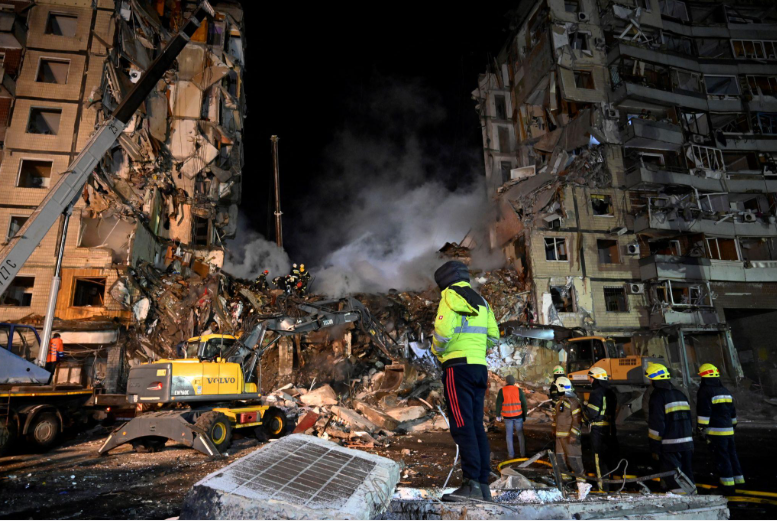
Russia launched one of its largest recent drone and missile attacks on Ukraine on Tuesday, striking electricity infrastructure across the country, knocking major power plants offline and deepening fears of another devastating winter as US-brokered peace negotiations approach.
Ukrainian President Volodymyr Zelenskyy said Russian forces launched 289 attack drones, 17 ballistic missiles and 59 cruise missiles overnight, targeting power generation facilities and electricity substations across multiple regions.
The bombardment affected infrastructure from Odesa on the Black Sea to Rivne in western Ukraine, triggering emergency power cuts and disrupting civilian services. Ukraine's largest private energy producer, DTEK, said three of its five thermal power plants had been knocked offline.
The latest attacks followed deadly Russian strikes on a humanitarian aid distribution site in the southern Zaporizhzhia region. Ukrainian authorities reported at least 31 deaths, with dozens of people still missing beneath the rubble. Later on Tuesday, Reuters reported that Zelenskyy had raised the death toll to at least 33.
The escalation comes ahead of planned talks between Russia, Ukraine and the United States in Abu Dhabi on November 10–11, raising urgent questions about whether diplomatic efforts can succeed while military attacks continue.
Russia Fires 289 Drones and 76 Missiles at Ukraine
According to Zelenskyy, the latest Russian attack involved a combination of long-range drones, ballistic missiles and cruise missiles directed at energy infrastructure and other targets.
The Ukrainian government reported damage in several regions, including Odesa, Cherkasy, Zhytomyr, Vinnytsia, Kharkiv, Dnipropetrovsk, Chernivtsi, Chernihiv and Rivne.
Ukraine's energy authorities said power plants, substations and distribution facilities had been struck, forcing emergency restrictions on electricity supplies.
The attack also damaged railway infrastructure, including passenger carriages, locomotives and a station, according to Ukrainian Prime Minister Sergii Koretskyi.
Russia's Defence Ministry confirmed carrying out a large-scale attack against Ukrainian electricity infrastructure but described its targets as facilities supporting military factories and the Ukrainian armed forces.
Moscow claimed to have struck four power plants, two electricity substations and port infrastructure. Reuters said it could not independently verify those specific Russian claims.
The competing accounts illustrate a recurring dispute over Russia's attacks on infrastructure that serves both civilian and military needs.
Regardless of Moscow's stated objectives, damage to interconnected electricity networks can disrupt essential services far beyond the immediate target.
Ukraine's Power Grid Faces Another Winter Emergency
The attacks have intensified concern about Ukraine's ability to maintain electricity and heating supplies as temperatures fall.
DTEK reported that three thermal power plants had stopped operating following the bombardment.
Ukraine's electricity system has suffered repeated attacks throughout the war, leaving authorities struggling to repair damaged generation capacity, substations and transmission networks.
The latest strikes have added pressure to a system already operating under severe constraints.
In Zhytomyr, regional authorities reported that more than 180,000 people were without electricity on Tuesday morning. Other regions introduced emergency or scheduled power outages.
Electricity is essential not only for household lighting and heating but also for hospitals, water systems, communications networks, public transport and industrial operations.
Damage to one part of the grid can force operators to restrict supplies elsewhere to prevent wider system failures.
For Ukraine, the strategic problem extends beyond restoring electricity after individual attacks. Repeated strikes can damage newly repaired equipment before the network has fully recovered.
As winter approaches, prolonged interruptions could place additional pressure on vulnerable households, healthcare facilities and local authorities.
The scale of the latest assault demonstrates why energy security has become one of the most consequential dimensions of the Russia–Ukraine war.
Russian Strike on Aid Distribution Site Kills Dozens
The latest bombardment followed a devastating attack on a humanitarian aid distribution site in Komyshuvakha, a village in Ukraine's Zaporizhzhia region.
Ukrainian officials said Russian bombs struck a former school and a nearby shelter on Monday as civilians gathered to receive assistance.
Associated Press reported on Tuesday that at least 31 people had been killed, including four police officers and two rescue workers, while more than 45 residents remained missing.
A later Reuters report cited Zelenskyy as saying at least 33 people had died, with approximately 50 still believed trapped beneath the rubble.
The changing figures reflect continuing search-and-rescue operations rather than a final confirmed casualty count.
Ukrainian authorities declared three days of mourning in the region.
The United Nations Human Rights Monitoring Mission in Ukraine expressed serious concerns about the attack and whether adequate precautions had been taken to protect civilians.
The circumstances raise significant questions under international humanitarian law, which requires parties to distinguish between military objectives and civilians and to take feasible precautions to avoid civilian harm.
Determining individual responsibility and whether a specific strike constitutes a war crime requires a detailed examination of the available evidence.
The humanitarian tragedy has nevertheless intensified pressure on Moscow as international negotiators prepare to discuss possible steps toward de-escalation.
Kharkiv Hospitals and Civilian Infrastructure Damaged
The latest Russian attacks also damaged medical facilities and residential areas.
In Kharkiv, Ukrainian authorities reported dozens of injuries after missiles and drones struck the city, damaging a hospital and nearby buildings.
Local officials said patients had to be transferred to other medical facilities after the attack.
In the Dnipro area, authorities reported casualties and damage to healthcare infrastructure, while rescue teams searched collapsed buildings.
Such attacks place additional demands on Ukraine's emergency services, which must simultaneously respond to casualties, evacuate patients, restore essential utilities and clear debris.
The cumulative consequences extend beyond immediate casualty figures.
Repeated damage to hospitals, housing and public infrastructure can weaken communities' ability to function and complicate efforts to maintain basic services during prolonged conflict.
Trump Administration Prepares New Russia–Ukraine Peace Talks
The military escalation comes at a critical moment for Washington's attempts to revive negotiations between Russia and Ukraine.
US special envoy Steve Witkoff said representatives from the United States, Russia and Ukraine were expected to meet in Abu Dhabi on November 10–11.
The proposed discussions will address postwar security arrangements, de-escalation, humanitarian measures and potential steps toward ending the conflict.
Kremlin spokesman Dmitry Peskov confirmed that Russia planned to send a delegation.
Ukraine has identified several immediate priorities, including halting attacks on energy infrastructure, restoring Black Sea grain shipments and expanding prisoner exchanges.
Zelenskyy has also been consulting European leaders about security guarantees and the conditions required for a durable settlement.
The European Commission is expected to host further discussions involving Ukraine, the United States, NATO and European partners.
However, the latest Russian strikes highlight the gap between diplomatic preparations and developments on the battlefield.
A ceasefire limited to energy infrastructure could provide immediate humanitarian relief, but its effectiveness would depend on clear commitments, monitoring arrangements and compliance by both sides.
Without those safeguards, any agreement could prove difficult to sustain.
Ukraine Strikes Russian Oil Refinery as Energy War Expands
The confrontation is not limited to Russian attacks on Ukrainian energy facilities.
Russian officials reported that Ukrainian drones struck a major oil refinery in Yaroslavl, northeast of Moscow, causing a fire and injuring two employees.
The regional governor said the attack damaged infrastructure at the Slavneft Yaroslavnefteorgsintez refinery.
Ukraine has increasingly targeted Russian oil refineries and energy-related infrastructure, seeking to disrupt fuel supplies and impose economic costs on Moscow.
The exchanges reflect the growing importance of energy systems as strategic targets in the conflict.
Russia's attacks threaten Ukrainian electricity generation and distribution, while Ukrainian strikes aim to disrupt infrastructure supporting Russia's economy and military operations.
The two campaigns are not identical in their targets or consequences, but both demonstrate how energy infrastructure has become central to the broader war.
They also complicate negotiations over a possible halt to attacks on critical facilities.
Any meaningful energy ceasefire would need to address the scope of protected infrastructure and establish procedures for investigating alleged violations.
Why Russia's Latest Attacks Threaten Peace Negotiations
The timing of the Russian offensive creates a major challenge for American diplomacy.
Washington is seeking to bring the opposing sides into renewed negotiations while both continue military operations designed to impose costs on the other.
For Ukraine, the immediate priority is preventing further destruction of electricity infrastructure and protecting civilians during the winter months.
For Russia, battlefield developments and military pressure remain important factors in its negotiating position.
Yet sustained attacks can also harden political positions and make concessions more difficult.
European governments face a parallel challenge: supporting Ukraine's defenses while participating in discussions about long-term security arrangements.
The latest bombardment has renewed calls for additional air-defense equipment, particularly systems capable of intercepting ballistic missiles.
The Financial Times reported that Ukraine intercepted only three of the 17 ballistic missiles launched during Tuesday's attack, illustrating the limitations of its current defensive capacity.
That vulnerability increases the importance of military assistance and infrastructure protection even as diplomatic initiatives proceed.
The Strategic Faultline: Can Peace Talks Survive a War on Ukraine's Energy Grid?
The November 3 attacks expose a central contradiction in the latest diplomatic effort.
Russia and Ukraine are preparing for negotiations intended to reduce hostilities, yet their military confrontation continues to expand across energy facilities, transport networks and other infrastructure.
For millions of Ukrainians, the consequences are immediate: unreliable electricity, damaged hospitals, disrupted transport and growing uncertainty about the coming winter.
For Washington and its European partners, the challenge is translating diplomatic discussions into arrangements that can provide measurable security and humanitarian benefits.
The planned Abu Dhabi talks may offer an opportunity to address attacks on critical infrastructure, prisoner exchanges and wider security questions.
But the latest bombardment shows that the military realities remain severe.
The defining faultline in the Russia–Ukraine war is now the widening distance between negotiations promising peace and attacks that continue to undermine the infrastructure Ukrainians need to survive.
Sources
Follow our reporting: Add Faultline Brief as a Preferred Source on Google →