Afghanistan's Unfinished War: Armed Resistance, Taliban Divisions and the Growing Threat to National Stability
Five years after returning to power, the Taliban face an increasingly complex security landscape marked by insurgent attacks, internal rivalries, militant sanctuaries, border tensions and economic grievances. The challenges stretch across Afghanistan, raising questions about the country's long-term stability and regional security.
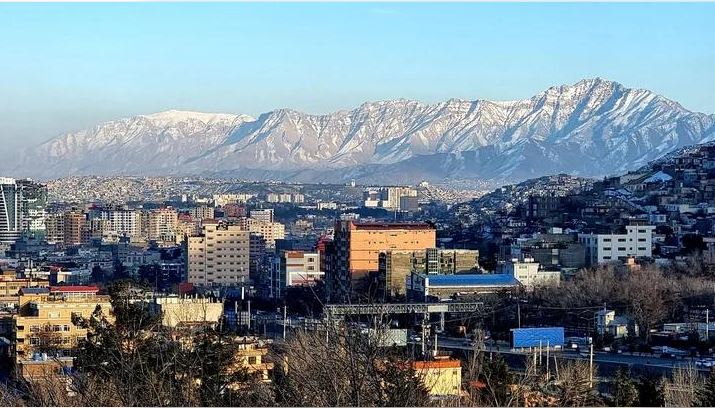
Five years after the Taliban returned to power, Afghanistan remains one of Asia's most consequential geopolitical fault lines. Although the movement controls the country's major cities and state institutions, armed opposition, Islamic State attacks, internal Taliban rivalries and deteriorating relations with neighboring countries continue to challenge its claims of lasting stability. From resistance operations in northern Afghanistan to militant activity in the east, border tensions with Pakistan and disputes over economic resources, the country faces overlapping security pressures that could shape its political future and destabilize the wider region.
These developments do not suggest that the Taliban government is on the verge of collapse. Its security apparatus remains dominant, and opposition groups have not demonstrated the ability to seize and retain substantial territory. Nevertheless, the persistence of localized violence and political grievances exposes the difference between controlling a country militarily and establishing durable national stability.
Armed Resistance Persists Across Afghanistan
The Taliban's victory in August 2021 ended the former republic's control of Afghanistan, but it did not eliminate organized armed opposition.
Several resistance organizations, including the National Resistance Front (NRF), the Afghanistan Freedom Front (AFF) and smaller armed networks, continue to claim operations against Taliban security personnel.
Their activities have been reported in northern and northeastern provinces, including Badakhshan, Panjshir, Baghlan, Takhar and Kunduz, as well as in Kabul and other areas.
The opposition generally relies on guerrilla tactics, including ambushes, targeted attacks and short-duration assaults, rather than attempting to hold major population centers.
An assessment published by FDD's Long War Journal on November 2 recorded 82 attacks claimed by resistance organizations across Afghanistan during October 2026, more than twice the September total.
Opposition groups claimed 122 Taliban personnel killed and 68 wounded. These casualty figures have not been independently verified and should not be treated as confirmed battlefield losses.
The reported increase is significant because it suggests that armed opposition networks retain the capacity to conduct geographically dispersed operations despite the Taliban's extensive security presence.
However, increased attacks do not necessarily indicate an emerging nationwide insurgency.
The resistance remains fragmented, its leadership operates under difficult conditions, and its organizations lack the substantial external military assistance that supported Afghan government forces before 2021.
Taliban Divisions Expose a Different Security Challenge
Not every confrontation involving Taliban personnel originates from an organized opposition movement.
Disputes over local authority, appointments, disarmament and control of economic resources have also created tensions within the Taliban's own networks.
In August 2026, a confrontation involving commander Juma Khan Fateh in northeastern Afghanistan highlighted the difficulty of enforcing central authority over local armed figures.
His supporters reportedly resisted disarmament orders amid disagreements connected to local power and mining revenues.
The confrontation eventually ended with his surrender, but it illustrated a broader governance challenge. Eurasianet
The Taliban leadership has sought to centralize decision-making and impose organizational discipline. Local commanders, however, sometimes possess longstanding relationships with communities and armed followers.
Disagreements over appointments, economic opportunities and the distribution of resources can therefore acquire a security dimension.
Such incidents should not be interpreted as proof of an imminent Taliban split. They nevertheless reveal vulnerabilities within a movement that presents itself as politically unified.
Islamic State Remains a Separate Threat
Alongside anti-Taliban resistance groups, Afghanistan faces a distinct challenge from Islamic State Khorasan Province, commonly known as ISIS-K or ISKP.
The organization rejects Taliban rule and has sought to undermine the movement's claims that it has restored national security.
Unlike the NRF and AFF, whose activities are primarily directed against Taliban authority, ISIS-K belongs to a transnational jihadist network and has pursued attacks against civilians, religious minorities and security targets.
Its history of attacks against Afghanistan's Shia communities, diplomatic interests and public gatherings makes it a particularly serious threat.
The Taliban have conducted operations against ISIS-K networks and disrupted some of their activities, but the organization has not been eliminated.
ISIS-K also creates an international security concern because its networks and propaganda extend beyond Afghanistan's borders.
The distinction between these organizations is essential: Afghanistan's armed opposition does not represent a single movement, ideology or political objective.
Pakistan–Afghanistan Tensions Create a Regional Flashpoint
One of the most consequential threats to Afghanistan's stability comes from its deteriorating relationship with Pakistan.
Islamabad has repeatedly accused the Afghan Taliban of allowing Tehreek-e-Taliban Pakistan (TTP) militants to operate from Afghan territory and organize attacks inside Pakistan.
The Taliban reject allegations that they permit Afghan territory to be used for attacks against neighboring states.
The disagreement has contributed to border confrontations, diplomatic tensions and restrictions affecting trade and cross-border movement.
For Afghanistan, disruptions along the Pakistan frontier can impose substantial economic costs, particularly on traders and communities dependent on established transport routes.
For Pakistan, the issue is closely connected to domestic security and the continuing threat posed by the TTP.
The risk is that a militant attack inside Pakistan could trigger retaliation or border escalation, further destabilizing an already fragile relationship.
Neither government has an obvious interest in prolonged interstate conflict, but mutual distrust and the absence of a durable security arrangement make repeated crises possible.
Northern Afghanistan and the Central Asian Security Frontier
Northern Afghanistan presents a different combination of challenges. Armed resistance, disputes involving local Taliban commanders and competition over natural resources have contributed to instability in several provinces.
In July 2026, an anti-Taliban group temporarily captured a district administrative center in Badakhshan before withdrawing.
The operation was unusual because opposition organizations have rarely managed to take administrative facilities since the Taliban returned to power.
The incident did not change the national balance of power, but it demonstrated the vulnerability of some local security positions.
The region's proximity to Tajikistan, Uzbekistan, Turkmenistan and China also gives these developments broader geopolitical importance.
Central Asian governments are concerned about border security, extremist movements, trafficking and the potential spillover of armed violence.
An August confrontation involving Taliban-aligned forces near the Tajik frontier reportedly resulted in the death of a civilian across the border, underscoring how localized Afghan disputes can become international incidents. Eurasianet
For neighboring governments, the immediate priority is preventing Afghanistan's internal security problems from spreading beyond its borders.
Economic Hardship Is Becoming a Security Risk
Afghanistan's political future cannot be separated from its economic conditions.
Years of conflict, reduced international assistance, limited investment and widespread poverty have placed enormous pressure on households.
The return of large numbers of Afghan migrants from neighboring countries has created additional demands for housing, employment, education and public services.
Economic grievances can also contribute directly to instability.
In parts of northern Afghanistan, disputes over gold mining and restrictions on poppy cultivation have generated protests and confrontations involving local authorities.
ACLED reported that attempts to regulate mining and eradicate poppy cultivation contributed to unrest during 2026.
These disputes illustrate a wider dilemma for the Taliban.
The authorities want to centralize revenue collection, control natural resources and enforce national policies. Yet communities dependent on informal economic activity may experience those policies as threats to their livelihoods.
Economic hardship does not automatically produce armed rebellion. However, when combined with political exclusion, weak institutions and coercive enforcement, it can create conditions that armed organizations exploit. Women's Rights and Political Exclusion Complicate Afghanistan's Future Afghanistan's security challenges also reflect deeper questions about political legitimacy.
The Taliban's restrictions on women's education, employment and participation in public life remain major obstacles to international engagement.
The absence of an inclusive political framework has also left former government officials, opposition figures and sections of Afghan society without meaningful representation in national decision-making.
These issues are not merely humanitarian or diplomatic concerns.
A government that excludes significant parts of its population may struggle to develop broad political legitimacy, even when it maintains effective military control.
The Taliban argue that their governance model reflects their interpretation of Islamic principles and Afghanistan's social circumstances. Critics maintain that restrictions on fundamental rights weaken the country's economic potential, international relationships and long-term stability.
The resulting political deadlock complicates efforts to normalize Afghanistan's relations with Western governments and international institutions.
China, Russia and Central Asia Face a Strategic Dilemma
Afghanistan's geopolitical importance has not diminished since the withdrawal of American forces.
China views stability in Afghanistan through the lenses of border security, counterterrorism, mineral resources and regional connectivity.
Russia is concerned about extremist networks, narcotics trafficking and security threats affecting Central Asia.
Pakistan, Iran and the Central Asian republics have direct interests in trade, migration, water resources and border stability.
These countries have practical reasons to maintain communication with the Taliban, regardless of their views about the movement's domestic policies.
Yet engagement presents a difficult balance.
Greater economic cooperation could help reduce Afghanistan's isolation and create incentives for stability. At the same time, neighboring governments remain concerned about militant organizations, uncertain security guarantees and the Taliban's ability to enforce commitments across the country.
Afghanistan consequently occupies an unusual position: it is diplomatically isolated from much of the West while remaining strategically indispensable to its immediate neighbors.
Could Afghanistan Face Another Nationwide Insurgency?
The increase in reported resistance attacks has raised questions about whether Afghanistan could experience a broader armed challenge to Taliban rule.
For now, the available evidence points toward persistent but fragmented opposition rather than a coordinated nationwide insurgency.
The Taliban retain major advantages in manpower, territorial control and access to state institutions.
Their opponents lack unified leadership, substantial military resources and reliable external support.
A nationwide rebellion would require far more than an increase in isolated attacks. It would likely depend on stronger opposition coordination, significant defections, sustained territorial gains or a major deterioration in the Taliban's internal cohesion.
None of these conditions has been demonstrated on a national scale.
Nevertheless, the security situation could deteriorate without producing an immediate threat to the government in Kabul.
Repeated guerrilla attacks, ISIS-K violence, disputes within Taliban ranks and border confrontations could gradually increase the costs of maintaining control.
The more serious danger may therefore be prolonged instability rather than sudden regime collapse.
The Real Fault Line: Control Without Lasting Stability
Afghanistan's central political challenge is the difference between military victory and durable governance.
The Taliban succeeded in defeating the former Afghan republic and establishing control over the state. Five years later, however, the country continues to face armed opposition, extremist violence, economic hardship, political exclusion and tense relations with neighboring governments.
These problems are interconnected, but they do not have a single cause or a single solution.
Military operations may disrupt insurgent networks, but they cannot independently resolve economic grievances. Centralized authority may reduce factional competition, but it can also provoke resistance when local communities feel excluded. Diplomatic engagement may encourage regional cooperation, but it does not automatically produce domestic political legitimacy.
For the international community, Afghanistan presents a difficult question: how to prevent renewed regional instability while addressing the governance and human rights issues that continue to isolate the country.
For the Taliban, the challenge is more immediate.
Their long-term authority will depend not only on controlling territory but also on maintaining internal cohesion, preventing militant threats, improving economic conditions and managing relations with Afghanistan's diverse communities.
Afghanistan's next major crisis may not resemble the war that ended in 2021. It could instead emerge from the gradual convergence of armed resistance, internal political tensions, economic grievances and regional security disputes.
That is what makes Afghanistan an enduring fault line: the country is no longer experiencing the same nationwide war, but the underlying conditions that have repeatedly produced instability remain unresolved.
Sources
Follow our reporting: Add Faultline Brief as a Preferred Source on Google →