West Bank Violence Escalates as Hebron Closures Deepen Ahead of Israel Election
Israeli military operations and restrictions across Hebron have intensified following a deadly attack on soldiers, bringing security, Palestinian movement restrictions and settlement policy into focus days before Israel's parliamentary election.
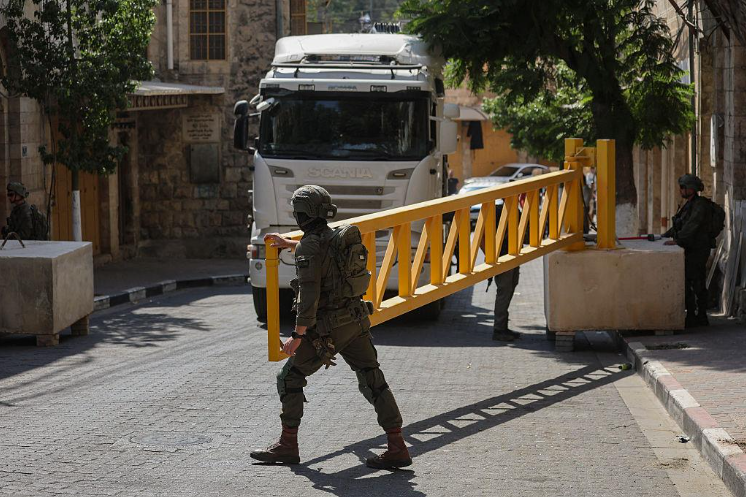
Israeli forces imposed widespread closures across the occupied West Bank city of Hebron on October 24, following a deadly attack that killed two Israeli soldiers and wounded three others, intensifying tensions just days before Israel's parliamentary election.
The restrictions have disrupted movement across the city, with Palestinian residents reporting blocked roads, evacuations and difficulties reaching essential services.
Israel's military said two Palestinian gunmen carried out the October 23 attack near Hebron before being killed by Israeli forces.
The military subsequently launched extensive searches, describing the operation as a response to a serious security threat.
The escalation comes ahead of Israel's October 27 election, in which Prime Minister Benjamin Netanyahu faces a closely contested battle for political survival.
It also coincides with increasing international concern about Israeli settlement expansion, settler violence and restrictions affecting Palestinian communities in the West Bank.
Israeli Military Operations Expand Across Hebron
Following the shooting, Israeli authorities announced tighter security measures across the Hebron area.
The military said its forces were conducting targeted searches in locations associated with the attackers and examining infrastructure it considered threatening.
On Saturday, access restrictions intensified, with vehicles reportedly unable to pass through several entrances to Hebron.
Palestinian news agency WAFA reported that Israeli troops ordered residents to leave homes in parts of the city and closed roads leading into surrounding neighborhoods.
The Israeli military did not immediately provide a response to questions about those evacuations, according to the Associated Press.
The restrictions have affected daily life in a city where checkpoints and military controls already shape movement between Palestinian communities.
For residents, the consequences extend beyond transportation delays.
Closures can interrupt medical appointments, prevent workers from reaching employment and restrict students' access to schools.
Israeli authorities maintain that security operations are necessary to prevent further attacks, while Palestinians and human rights organizations have long criticized sweeping movement restrictions for their impact on civilians.
Hebron Attack Intensifies Security Concerns
The latest escalation began when two armed Palestinians attacked Israeli soldiers near Hebron on Friday.
According to Israel's military, two soldiers were killed and three others sustained minor injuries.
Israeli forces subsequently killed both gunmen.
The military said the attackers were carrying firearms and claimed its response prevented a further attack against Israeli civilians.
Following the incident, Netanyahu's office instructed the military to prepare for a wider closure of the occupied West Bank.
The immediate military response reflects Israel's longstanding emphasis on preventing armed attacks through intelligence operations, checkpoints and raids.
However, the expansion of restrictions across civilian areas raises questions about proportionality and the humanitarian consequences of security measures affecting communities beyond the location of an attack.
West Bank Settler Violence Adds to Tensions
The Hebron developments are unfolding against a broader deterioration in security conditions across the occupied West Bank.
Palestinian communities have reported increasing attacks by Israeli settlers, particularly during the annual olive harvest.
The Associated Press reported that Israeli rights organization Yesh Din documented more than 325 incidents involving violence, damage to olive trees and theft of agricultural produce since late September.
More than 130 of those incidents reportedly involved physical assaults on harvesters.
For many Palestinian families, olive cultivation provides both income and a connection to land cultivated across generations.
Violence against farmers therefore carries economic, social and political consequences.
Critics accuse Israel's governing coalition of enabling settlement expansion and failing to prevent attacks by extremist settlers.
Netanyahu has condemned some perpetrators while defending settlement development and emphasizing Israeli security claims.
The latest shooting and military response could further intensify competing narratives about security, land and civilian protection.
Israel's Election Raises the Political Stakes
Israel's October 27 parliamentary election is widely viewed as a referendum on Netanyahu's leadership following years of regional warfare.
Security policy remains central to the campaign, particularly after the October 7, 2023, Hamas-led attacks and subsequent conflicts involving Gaza and Lebanon.
Netanyahu's political allies emphasize military strength, settlement expansion and resistance to security concessions.
Opposition parties have criticized his handling of the country's security challenges, although they differ over future policy toward Palestinians.
Former military chief Gadi Eisenkot and the alliance associated with Naftali Bennett and Yair Lapid are among the prominent alternatives competing for influence.
Israel's proportional electoral system means coalition negotiations will be decisive.
A government requires support from at least 61 members of the 120-seat Knesset, making smaller parties potentially important in determining the next administration.
The Hebron violence could reinforce security-focused campaigning, but its effect on voting preferences remains uncertain.
Faultline Brief Assessment: Security Crisis Meets Political Uncertainty
The latest West Bank violence highlights the intersection of immediate security threats, prolonged occupation and Israel's approaching election.
The killing of Israeli soldiers represents a serious security incident. The subsequent restrictions across Hebron also create substantial risks for Palestinian civilians whose daily movements and access to essential services are affected.
The political consequences may extend beyond the immediate military operation.
A renewed emphasis on security could strengthen hardline electoral messaging, while continued settlement violence and movement restrictions may intensify international criticism of Israeli policy.
Three developments deserve particular attention: whether Hebron's closures expand or ease, whether further attacks trigger additional military operations, and how Israeli political parties incorporate the escalation into the final days of campaigning.
The election will determine the next governing coalition, but it will not by itself resolve the underlying disputes over occupation, settlements, Palestinian rights and Israeli security.
Without progress on those questions, temporary military measures are unlikely to produce lasting stability in the West Bank.
Sources
Follow our reporting: Add Faultline Brief as a Preferred Source on Google →