US Weighs 'Mother of All Bombs' Against Iran: What Is the GBU-43/B and Could It Destroy Underground Nuclear Sites?
The US is reportedly considering the GBU-43/B Mother of All Bombs for possible strikes on Iran. Its only confirmed combat use was in Afghanistan in 2017, and experts question its effectiveness against deeply buried nuclear facilities.
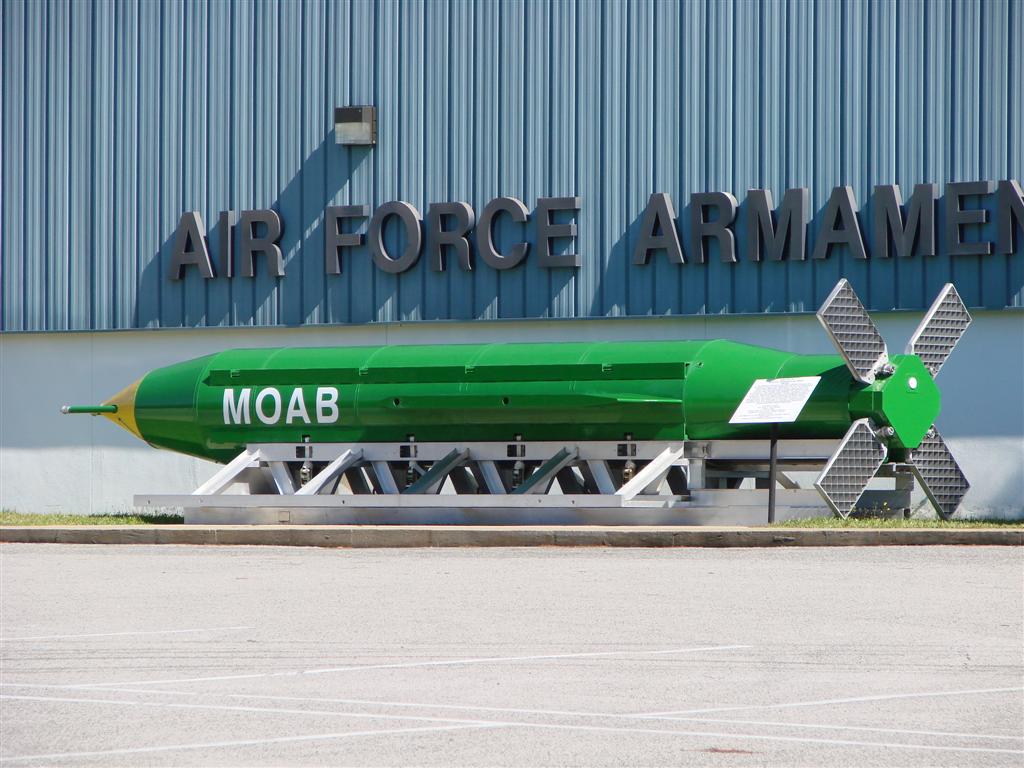
The United States is considering the possible use of its GBU-43/B Massive Ordnance Air Blast bomb, widely known as the "Mother of All Bombs," in potential future military strikes against Iran, according to an exclusive CNN investigation citing multiple American officials familiar with military planning.
The reported options include attacks on Iranian energy infrastructure and nuclear-related facilities if President Donald Trump authorizes renewed major combat operations.
The weapon has an extraordinary reputation. Weighing approximately 21,600 pounds, or nearly 10 metric tonnes, the GBU-43/B is designed to generate a devastating explosion across a wide area.
Yet its enormous explosive power raises a central question: would using America's most powerful operational conventional air-blast bomb bring Washington closer to its objectives in Iran, or deepen a conflict that has already destabilized the Middle East and disrupted international energy markets?
The answer depends partly on a distinction often overlooked in public discussion.
The MOAB is a massive surface-blast weapon. It is not the same as the specialized bunker-busting bombs developed to penetrate deeply buried and hardened facilities.
That difference could prove decisive if its intended targets include installations protected by mountains and thick underground fortifications.
What CNN's Exclusive Investigation Reveals
CNN reporters Zachary Cohen, Haley Britzky and Kevin Liptak reported on October 14 that U.S. military officials had developed additional strike packages covering Iranian energy infrastructure and nuclear-related targets.
According to CNN, some of those plans explicitly include the GBU-43/B.
One source described options involving extensive attacks on energy infrastructure. Another indicated that possible strikes against a suspected nuclear-related installation at Pickaxe Mountain could involve the MOAB.
CNN also reported that some officials were examining whether additional strikes could precede a reduction or withdrawal of American forces from the U.S. Central Command region.
That possibility creates a potentially significant political dimension: a major attack could be presented as a final demonstration of military strength before an attempt to end or scale back American involvement.
The reported planning comes ahead of the November U.S. midterm elections, with the administration facing pressure over the duration and economic consequences of the Iran conflict.
However, a military planning option is not an operational decision.
As of October 15, there is no confirmed presidential order to use the GBU-43/B against Iran, and no confirmed deployment of the weapon in the current conflict.
What Is the GBU-43/B 'Mother of All Bombs'?
The GBU-43/B is a GPS-guided conventional bomb developed by the United States Air Force Research Laboratory in 2003.
Its official designation stands for Massive Ordnance Air Blast.
Its widely recognized nickname, "Mother of All Bombs," is an informal interpretation of the acronym MOAB.
The weapon was developed rapidly during preparations for the U.S.-led invasion of Iraq, partly to provide an exceptionally powerful conventional explosive capability and a means of psychological pressure.
Unlike a nuclear weapon, the MOAB does not produce its destructive force through nuclear fission or fusion.
It uses a large conventional explosive warhead.
The bomb is approximately 30 feet long, more than three feet in diameter and weighs around 21,000–21,600 pounds, depending on the cited specification.
It has a large explosive warhead and uses satellite-based guidance to direct it toward a designated target area.
The weapon was designed for delivery from a specially configured military transport aircraft rather than a conventional fighter jet.
Its destructive effects are concentrated on a broad area, making it fundamentally different from weapons optimized for penetration through thick rock or reinforced concrete.
Although the MOAB is often called America's largest non-nuclear bomb, that description needs qualification.
It is one of the most powerful conventional air-blast weapons ever deployed by the United States.
However, the GBU-57 Massive Ordnance Penetrator is heavier, weighing approximately 30,000 pounds.
The difference between the two weapons is not simply size. They are designed to solve different military problems.
How Many Times Has the Mother of All Bombs Been Used?
The GBU-43/B has one publicly confirmed combat deployment.
That occurred on April 13, 2017, during Donald Trump's first presidential administration.
An American military aircraft dropped the bomb on an Islamic State–Khorasan Province tunnel complex in the Achin district of Afghanistan's Nangarhar province.
U.S. military officials said the operation targeted fortified militant positions, tunnels and defensive obstacles that threatened Afghan and American forces.
The strike attracted extraordinary international attention because the MOAB had never previously been used in combat.
Early Afghan official reports said 36 Islamic State fighters had been killed. Subsequent Afghan official estimates rose substantially, reaching more than 90.
Those figures were not independently established through a comprehensive public assessment, and claims about civilian casualties were disputed.
Afghan and U.S. officials reported no civilian deaths at the time, while other accounts questioned that conclusion.
The 2017 operation demonstrated the weapon's ability to produce an exceptionally destructive conventional blast.
What it did not establish was that the MOAB could destroy any underground installation regardless of its depth, geology or defensive construction.
It also did not establish that the use of an enormous bomb could deliver a decisive political outcome.
For the Afghanistan war, the strike was a dramatic tactical event, not the end of the conflict.
No subsequent combat use of the GBU-43/B has been publicly confirmed through October 15, 2026.
Could the MOAB Destroy Iran's Pickaxe Mountain Facility?
CNN identified Pickaxe Mountain as one of the locations discussed in American military planning.
The site has attracted attention because U.S. and Israeli officials suspect it may be connected to components of Iran's nuclear program.
The precise nature of activities inside the facility has not been independently established.
Public assessments describe a potentially heavily protected underground installation.
If a sensitive facility is buried beneath substantial layers of rock, the central question is whether an explosive weapon can deliver destructive force to the actual underground structures rather than mainly affecting the surrounding surface.
That is where the limitations of the MOAB become especially important.
The bomb could cause major destruction in an exposed area, but its design does not make it an ideal substitute for a dedicated deep-penetration weapon.
Military officials cited by CNN expressed concern that the MOAB would have limited effectiveness against facilities protected beneath thick granite and other fortifications.
Consequently, even a visually spectacular strike might leave important underground infrastructure intact.
The distinction between visible destruction and confirmed strategic results is crucial.
An explosion can devastate the surface while leaving uncertainty about equipment, stockpiles or installations situated far below it.
Without reliable post-strike evidence, claims that a nuclear capability had been eliminated would require caution.
Can the 'Mother of All Bombs' End a War?
The history of modern warfare offers a warning against treating a single weapon as a political solution.
The MOAB's 2017 deployment in Afghanistan demonstrated the destructive capability of an unusually large conventional bomb.
It did not determine the long-term outcome of the Afghanistan conflict.
The same distinction applies to Iran.
A military strike can destroy equipment, disrupt operations or impose costs.
Ending a war requires a political outcome as well.
Washington's stated objective of preventing Iran from acquiring nuclear weapons involves not only physical infrastructure but also technical expertise, materials, international monitoring and future government decisions.
Destroying a facility does not necessarily eliminate the knowledge or capability to rebuild it.
Furthermore, a government may respond to major attacks by strengthening its commitment to resistance rather than accepting the attacker's demands.
CNN reported that some American officials are privately questioning how possible additional strikes fit into a strategy for ending the war.
This is perhaps the most consequential aspect of the entire disclosure.
The issue is not simply whether the United States possesses sufficient explosive power to inflict enormous damage.
It is whether that damage can produce a credible, durable and politically achievable result.
Faultline Brief Assessment: A Powerful Bomb Is Not Necessarily a Decisive Weapon
CNN's exclusive reporting has brought renewed attention to one of America's most formidable conventional weapons.
But the technical and strategic distinctions surrounding the MOAB are essential.
The GBU-43/B is an exceptionally powerful area-blast bomb. It has been used once in confirmed combat, in Afghanistan in 2017.
It is not the same as the GBU-57 bunker buster designed to penetrate deeply fortified underground targets.
Its potential use against Iran could represent a major escalation and an attempt to demonstrate American military resolve.
Yet if the objective is to destroy facilities located deep beneath rock, the MOAB's enormous blast effects may not translate into decisive underground damage.
The humanitarian and regional consequences could also be severe, particularly if attacks involve energy infrastructure or locations near civilian communities.
For President Trump, the choice would involve military effectiveness, escalation risks, domestic economic consequences and the possibility of reaching a negotiated settlement.
For Iran, the reported plans increase uncertainty over whether Washington intends to maintain pressure or resume a wider offensive.
The defining question is not whether the United States can unleash an enormous conventional explosion. It is whether that explosion would change Iran's strategic decisions or merely widen a war that military force alone has yet to resolve.
Until an official decision is announced, the proposed use of the Mother of All Bombs remains a reported planning option—not a confirmed forthcoming attack.
Sources
Follow our reporting: Add Faultline Brief as a Preferred Source on Google →