
North Korea Fires 10 Ballistic Missiles as Border Tensions Escalate, Putting US and South Korea on Alert
North Korea's latest missile barrage comes amid a dispute over land mines, new military deployments and a deadline to restart propaganda broadcasts along the heavily fortified border. South Korea is strengthening its defenses while Washington and Tokyo monitor the situation.
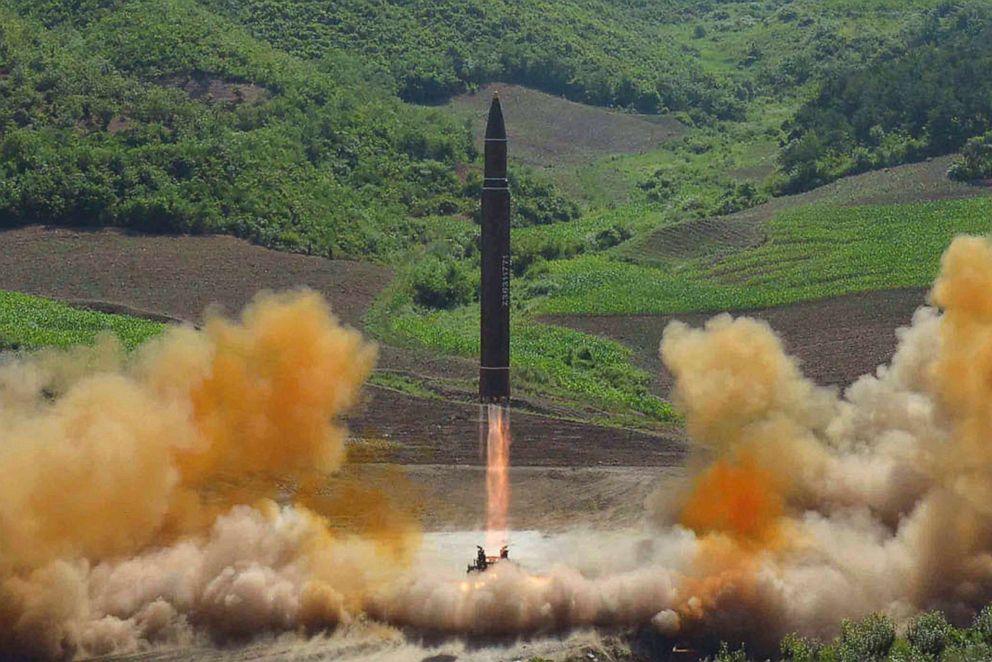
North Korea fired approximately 10 short-range ballistic missiles toward the sea off its eastern coast on Thursday, October 29, escalating military tensions with South Korea just days before Pyongyang's self-imposed deadline to resume propaganda broadcasts along the heavily fortified border.
South Korea's Joint Chiefs of Staff said the missiles were launched at approximately 12:30 p.m. local time from the Wonsan area on North Korea's east coast. The projectiles traveled roughly 250 kilometers before falling into the sea, according to Seoul's military assessment.
The launches triggered heightened surveillance by South Korean forces and renewed coordination with the United States and Japan. Japanese authorities also detected the activity, reporting that the missiles appeared to have fallen outside Japan's exclusive economic zone.
The barrage came against a backdrop of worsening relations between the two Koreas, including a disputed land-mine explosion that injured three South Korean soldiers, North Korean artillery movements near the border and threats to resume loudspeaker broadcasts targeting the South.
The developments have increased concerns that a confrontation along one of the world's most heavily militarized borders could escalate through miscalculation, even without either side seeking a wider conflict.
## North Korea Missile Launches Trigger Military Alert South Korea's military initially reported that North Korea had launched around 10 short-range ballistic missiles, while subsequent accounts described the barrage as involving approximately a dozen projectiles.
The Joint Chiefs of Staff said surveillance and readiness had been strengthened in anticipation of possible additional launches.
South Korean authorities were also sharing information with the United States and Japan to assess the launches and maintain a coordinated security response.
The missile tests followed an earlier launch on October 12, when Pyongyang said it had tested tactical ballistic missiles designed to improve a weapons component.
The latest barrage demonstrates North Korea's ability to conduct multiple short-range launches within a brief period, complicating regional missile-defense planning.
However, the number of missiles fired does not, by itself, establish that Pyongyang is preparing for an imminent military attack.
South Korea condemned the launches as violations of United Nations Security Council resolutions restricting North Korea's ballistic missile activities.
## Land-Mine Explosion Deepens North–South Korea Crisis The latest military confrontation has its roots in an increasingly bitter dispute over the inter-Korean border.
On September 21, three South Korean soldiers were injured by land-mine explosions inside the Demilitarized Zone, the heavily fortified buffer separating the two countries.
South Korean authorities accused North Korea of responsibility, while Pyongyang rejected the allegation.
A subsequent South Korean and United Nations investigation concluded that North Korean mines had been planted in the area more than a year earlier.
Seoul described the incident as a violation of the armistice arrangements governing the border and called for dialogue to prevent further confrontations.
North Korea responded with warnings against what it characterized as South Korean military provocations.
The dispute has unfolded as North Korean soldiers continue reinforcing border defenses, including constructing fences and laying mines near the Military Demarcation Line.
These activities have raised concerns about accidental encounters between troops operating in close proximity.
The two Koreas remain technically at war because the 1950–1953 Korean War ended with an armistice rather than a formal peace treaty.
## Why the United States and Japan Are Watching Closely The North Korean missile launches carry implications beyond the Korean Peninsula.
The United States maintains a military alliance with South Korea and stations forces in the country as part of its regional defense commitments.
Japan, another major American ally, is also directly concerned about North Korea's ballistic missile development.
Even short-range missile tests can generate significant regional alarm because they provide information about North Korea's weapons readiness, operational procedures and potential ability to conduct coordinated launches.
Washington, Seoul and Tokyo have expanded security cooperation in response to North Korea's missile and nuclear programs.
Thursday's barrage again demonstrated the importance of rapid information-sharing among the three governments.
The immediate launches did not appear to threaten Japanese territory, according to the initial Japanese assessment. Nevertheless, the tests add pressure to an already strained regional security environment.
For Washington, the challenge is to maintain credible deterrence without allowing routine military signaling to escalate into an uncontrolled confrontation.
## China, Russia and the Wider Strategic Picture North Korea's security calculations are also shaped by its relationships with China and Russia.
Pyongyang has deepened cooperation with Moscow in recent years, while maintaining its longstanding political and economic relationship with Beijing.
Kim Jong Un's recent engagement with senior Chinese officials highlights North Korea's continued efforts to reinforce ties with its principal regional partner.
These relationships matter because any confrontation on the Korean Peninsula would have consequences for the wider balance of power in Northeast Asia.
China has a strong interest in preventing instability along its northeastern frontier. Russia, meanwhile, has its own strategic reasons for maintaining close relations with Pyongyang.
For the United States, a Korean Peninsula crisis would create additional security demands at a time when Washington is already managing major international tensions.
The danger is not necessarily that a regional war is imminent, but that several overlapping disputes could reduce the space available for diplomatic compromise.
North Korea's latest missile barrage is therefore more than another weapons test. It is part of a broader confrontation involving border security, military deterrence and stalled diplomacy. With Pyongyang's propaganda deadline approaching, the central question is whether both sides can prevent an increasingly hostile standoff from turning into a direct military crisis.
Sources
Follow our reporting: Add Faultline Brief as a Preferred Source on Google →