US Midterm Elections 2026: Russia and China Disinformation Threats Test America's Election Security
With Americans preparing to vote on November 3, suspected Russian influence operations, China-linked social media networks and AI-generated political deepfakes are raising new concerns about election integrity. Security experts warn that the greatest danger may be the erosion of public trust rather than the manipulation of actual votes.
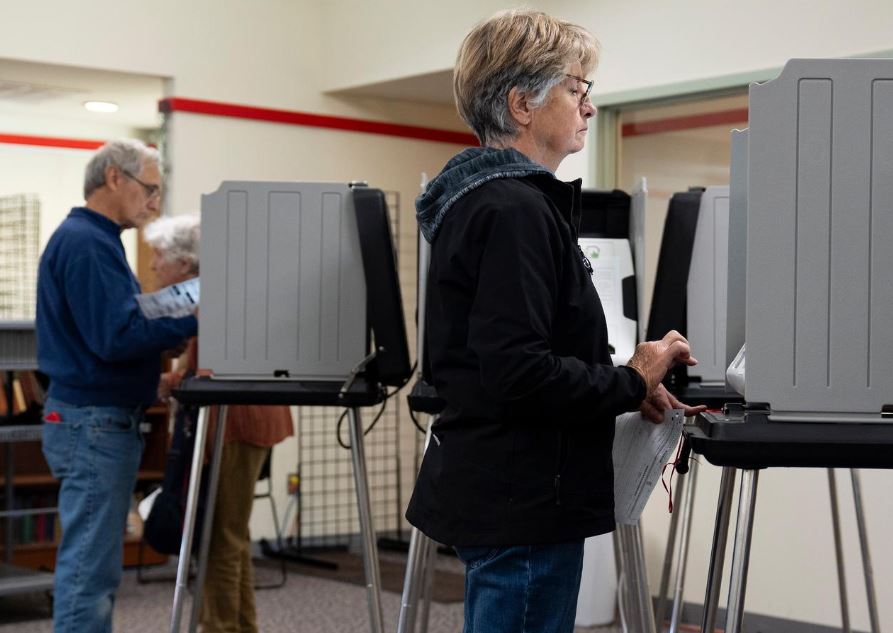
The United States is entering the final hours before the 2026 midterm elections amid growing warnings that Russia and China-linked influence operations are attempting to exploit political divisions, spread misleading information and undermine confidence in American democracy.
As voters prepare to decide control of the House of Representatives and Senate on November 3, intelligence assessments, cybersecurity warnings and independent investigations have identified foreign-linked campaigns using social media impersonation, fabricated allegations and artificial intelligence to influence political conversations.
Recent reporting by the Associated Press has documented AI-manipulated videos targeting US Senate candidates, while researchers at Graphika have uncovered China-linked accounts impersonating American voters. Meanwhile, election officials have expressed concerns about reduced communication between federal intelligence agencies and state election authorities.
Yet an essential distinction remains: documented efforts to influence voters are not evidence that foreign governments have changed votes or compromised election results. The immediate challenge for American election security is protecting both the voting process and public confidence in its legitimacy.
Russia's Disinformation Campaign Targets US Senate Elections
Russia's suspected influence operations have become a significant concern as competitive Senate races approach their conclusion.
In October, Democratic members of Congress said classified intelligence briefings indicated that Moscow was conducting online misinformation campaigns against Democratic candidates.
Senator Mark Warner and Representative Jim Himes, senior Democrats on the congressional intelligence committees, described activities resembling Russian influence operations documented during previous US elections.
Also Read This: Cyberattack Disrupts Federal Election Commission Filing System
Their concerns were reinforced by an Associated Press investigation into fabricated videos targeting Democratic Senate candidates Sherrod Brown in Ohio and James Talarico in Texas.
The videos used the names and images of real people to circulate damaging allegations about the candidates. Individuals portrayed in the material rejected the claims.
Digital forensics researchers identified similarities between the videos and previous operations associated with Storm-1516, a Russian-linked disinformation network.
Researchers assessed that artificial intelligence had likely been used to generate or manipulate elements of the footage.
The incidents demonstrate how foreign influence operations can exploit the speed of online political communication, particularly during the final days of a closely contested election.
Even when false material is identified and removed, copies can continue circulating through social media accounts, private messages and alternative platforms.
Moscow has previously denied interfering in American elections.
China-Linked Accounts Impersonate American Voters
China-linked online activity presents a different but equally important election security challenge.
According to an October 30 investigation reported by the Associated Press, researchers at Graphika identified activity associated with Spamouflage, a long-running influence network linked by analysts to China.
The network used social media accounts posing as American voters to publish divisive political content, question democratic institutions and amplify controversial issues.
Some accounts adopted political identities associated with supporters of President Donald Trump, while others promoted narratives critical of American democracy.
Graphika also identified an account with a substantial following that had shifted toward China-related and US political messaging, although researchers could not establish whether the account had changed ownership or been compromised.
Unlike the suspected Russian operations targeting particular Democratic candidates, China-linked activity has frequently focused on broader political divisions and issues affecting Beijing's strategic interests.
Researchers have cautioned that Spamouflage has often struggled to convincingly imitate American political conversations, limiting its apparent effectiveness.
Nevertheless, the activity illustrates how foreign-linked networks can attempt to exploit domestic disagreements without necessarily supporting a single party.
The Chinese Embassy in Washington has denied that Beijing interferes in US elections.
AI Deepfakes Become a New Election Security Threat
Artificial intelligence has increased the speed and sophistication with which misleading political material can be produced.
Fabricated videos can imitate news broadcasts, create apparently authentic interviews and portray individuals making statements they never delivered.
The technology also makes it easier to produce multiple versions of the same misleading message for different audiences.
In the final days before the midterms, the risks are particularly acute because voters, journalists and election officials have limited time to verify material before it spreads.
The FBI and the Cybersecurity and Infrastructure Security Agency warned in October that malicious actors could use AI-enhanced phishing messages and fraudulent communications to target election officials, political organizations and members of the public.
These warnings concern both information manipulation and conventional cybersecurity threats.
An attacker does not need to alter a ballot to cause disruption. Compromising an election office's email account, impersonating an official or publishing false voting instructions could create confusion and additional pressure on local administrators.
However, the existence of such risks does not establish that a particular election system has been successfully breached.
That distinction is essential to accurate reporting on election security.
Are US Voting Machines and Election Results at Risk?
The most consequential question facing voters is whether foreign interference could affect the actual counting of ballots.
Available public intelligence assessments and reporting do not establish that Russia, China or another foreign government has gained the ability to alter the results of the November 3 elections.
US elections are administered primarily by state and local authorities, using different voting procedures, equipment and verification systems.
This decentralized structure creates operational challenges but also makes nationwide manipulation substantially more difficult.
Paper ballots, audits, testing procedures and other safeguards provide additional methods for detecting errors and checking reported outcomes, although protections and procedures vary among jurisdictions.
American intelligence officials and lawmakers have repeatedly distinguished between foreign influence campaigns and direct interference with election infrastructure.
In October, Representative Jim Himes emphasized that the evidence pointed toward attempts to shape political perceptions rather than demonstrated capabilities to change election results.
The distinction matters because exaggerated claims about foreign hacking can themselves become tools for undermining public confidence.
Election officials must therefore confront two separate challenges: preventing genuine cyber incidents and countering unsupported allegations that voting systems have been compromised.
America's Democratic Trust Faces a Test Beyond November 3
The 2026 midterm elections illustrate a changing dimension of geopolitical competition.
Foreign governments no longer need to rely exclusively on traditional intelligence operations or direct political contacts to attempt to influence another country's public debate.
Social media networks, anonymous accounts and artificial intelligence provide opportunities to amplify division, impersonate citizens and distribute fabricated political material at relatively low cost.
But their actual influence on voter behavior remains difficult to measure, and the existence of an online campaign does not prove that it changed an election outcome.
For the United States, the immediate priority is to protect election infrastructure, communicate verified information and ensure that allegations of foreign interference are supported by evidence.
The longer-term challenge is preserving confidence in democratic institutions without allowing legitimate security concerns to become another source of political polarization.
The defining faultline of the 2026 US midterm elections may not be whether foreign adversaries can change American votes, but whether they can persuade Americans to distrust the votes that are counted.
Sources
Follow our reporting: Add Faultline Brief as a Preferred Source on Google →