US Midterm Elections 2026: Democrats Take Congress as Iran War Reshapes Middle East Tensions
The 2026 US midterm election results have transformed Washington's political landscape, with Democrats winning control of both chambers of Congress as public frustration over the Iran war and rising living costs undermines President Donald Trump's Republican Party. The shift raises new questions about US military operations in the Middle East, Washington's relationship with Israel and the prospects for negotiations with Tehran.
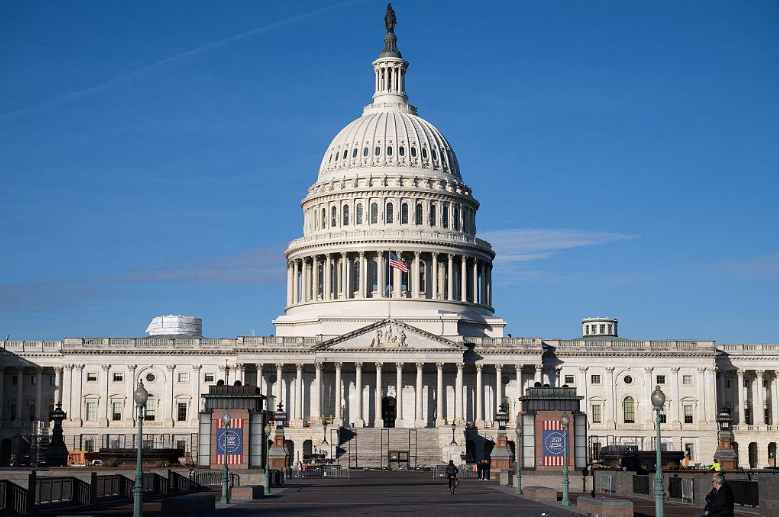
The Democratic Party's sweeping victory in the 2026 US midterm elections has created a new political challenge for President Donald Trump, placing his administration's Middle East strategy under intensified scrutiny as the United States remains involved in a prolonged war with Iran.
Democrats captured majorities in both the House of Representatives and Senate in Tuesday's elections, overturning Republican control of Congress and preparing the ground for a divided government when the new legislature convenes on January 3, 2027.
The election results reflected widespread voter dissatisfaction with the cost of living, the conduct of the administration and the economic consequences of the eight-month US-Israeli conflict with Iran.
Trump acknowledged on Wednesday that the war had contributed to Republican losses, although he defended his decision to launch military operations against Tehran.
The political shift is already being closely watched in Israel, Iran and the Gulf, where governments are assessing whether a Democratic-controlled Congress will increase pressure for a diplomatic settlement or create new uncertainty over American foreign policy.
Democrats Win House and Senate as Iran War Shapes US Midterm Results
The November 3 elections delivered significant Democratic gains across the United States, including victories in states traditionally considered Republican strongholds.
According to Associated Press reporting, Democrats secured at least 54 Senate seats and a House majority comfortably above the 218 seats required for control.
Their victories included Senate contests in Kansas, Texas and South Carolina, underscoring the scale of the Republican setback.
Although domestic economic concerns dominated much of the campaign, the war with Iran became a central political issue because of its impact on energy prices, household expenses and the broader economy.
Democratic candidates repeatedly criticized the administration's handling of the conflict and questioned whether the costs of military operations were justified.
Vice President JD Vance also identified the Iran war as a factor in the Republican defeat.
Exit polling cited by Reuters indicated that approximately 70% of surveyed voters wanted Congress to exercise stronger checks on presidential power.
These results do not establish that foreign policy alone determined the election. They do, however, show how a prolonged overseas conflict can become a major domestic political liability when its economic consequences affect American households.
Trump Acknowledges Iran War's Role in Republican Defeat
President Trump conceded that the conflict had influenced the election outcome.
Speaking to Fox News, Trump said Iran had been one element in the Republican losses.
In a separate interview with The Wall Street Journal, he defended his decision to attack Iran and maintained that he would make the same choice again.
His comments suggest that the administration is not preparing an immediate reversal of its military policy simply because Republicans lost control of Congress.
However, the political environment surrounding future decisions has changed.
Until now, Republican majorities in both chambers had generally provided Trump with substantial legislative support.
The incoming Democratic Congress will be positioned to demand greater accountability over military operations, government spending and the administration's strategic objectives in the Middle East.
That could include hearings examining the origins of the conflict, the effectiveness of military operations, civilian casualties and the economic consequences of disruptions to regional energy supplies.
Iran Welcomes Democratic Victory but Warns Against Further US Attacks
Iranian officials responded to the American election results by portraying the Democratic victory as evidence of public opposition to the war.
Iranian Parliament Speaker Mohammad Baqer Qalibaf, who has played a prominent role in negotiations with Washington, welcomed what he characterized as an antiwar message from American voters.
He also warned the United States against launching another major attack on Iran.
Supreme Leader Mojtaba Khamenei adopted a more confrontational position, arguing that American hostility toward Iran would continue regardless of which political party controlled Congress.
The different statements reveal a central tension in Tehran's response.
Iranian officials see an opportunity to strengthen their negotiating position, but they remain skeptical that changes in congressional leadership will fundamentally transform Washington's strategic objectives.
The election result could encourage Iranian negotiators to seek more favorable terms, particularly if they believe Trump faces greater domestic pressure to end the conflict.
However, that calculation carries risks.
If Tehran interprets the Republican defeat as a sign that Washington is unwilling to escalate, it could adopt a harder negotiating position.
Conversely, the administration could seek to demonstrate that its military options remain credible despite the electoral setback.
Neither outcome is inevitable, making the coming diplomatic exchanges particularly consequential.
Israel Faces New Political Pressure After US Election Results
The Democratic takeover of Congress has also intensified debate in Israel about the future of relations with Washington.
The US election followed an inconclusive Israeli parliamentary election in which Prime Minister Benjamin Netanyahu's right-wing coalition lost its majority but remained in contention to form the next government.
Israeli opposition leaders seized on the American results to criticize Netanyahu's close political alignment with Trump and the Republican Party.
They argued that Israel's long-term security depends on maintaining support across the American political spectrum.
The United States has provided Israel with extensive military assistance for decades, supported by successive Democratic and Republican administrations.
However, divisions over Israel's military operations in Gaza, Lebanon and Iran have placed that bipartisan relationship under increasing strain.
A Democratic-controlled Congress could subject weapons transfers, military financing and the conduct of Israeli operations to closer examination.
Congressional committees could demand information about the use of American weapons, the humanitarian consequences of military operations and the administration's broader regional strategy.
Such oversight would not automatically end US military assistance to Israel.
Existing commitments, presidential authorities and differences among Democratic lawmakers would continue to shape policy.
Nevertheless, Israel may face a more complicated political environment in Washington as its leaders attempt to navigate their own coalition negotiations.
Will Democratic Control of Congress Change Trump's Iran War?
The central question is how much influence the new congressional majorities can exercise over an ongoing conflict.
The US Constitution divides authority over war and foreign policy between the president and Congress.
The president serves as commander in chief and directs military operations, while Congress controls appropriations, legislates on national security and possesses constitutional authority to declare war.
Democratic lawmakers could seek additional oversight of military spending, demand briefings on operational objectives and introduce legislation intended to constrain or condition aspects of the conflict.
They could also investigate decisions made before and during the military campaign.
However, the president retains substantial executive authority, and major changes to military policy may require legislation capable of surviving a presidential veto.
Democratic control of Congress therefore creates stronger institutional checks without transferring control of military operations away from the White House.
Another important factor is timing.
The newly elected Congress will not take office until January 3, 2027.
Republicans retain their existing congressional majorities during the remaining weeks of the current legislative session.
The immediate impact of the election is consequently political, while its most significant institutional effects will emerge after the new Congress convenes.
Gulf States See an Opening for Diplomacy With Iran
The election outcome is also being assessed across the Gulf, where the conflict has disrupted energy supplies, shipping routes and regional security arrangements.
Reuters reported that some Gulf governments believe Trump's congressional losses could increase his incentive to pursue a negotiated settlement with Iran.
A diplomatic agreement could reduce the threat of renewed military escalation and potentially restore more predictable conditions for international shipping and energy exports.
Yet regional governments face difficult choices.
They maintain important security relationships with Washington while also seeking to avoid further instability involving Iran.
Any agreement would need to address questions surrounding Iran's nuclear program, sanctions, regional security and access through the Strait of Hormuz.
Ebtesam al-Ketbi of the Emirates Policy Center has suggested that the election could create an opportunity for genuine negotiations if Tehran recognizes Washington's need for a workable settlement.
She has also warned that treating the result as evidence of American weakness could increase the risk of military escalation.
For Gulf governments, the challenge is to encourage diplomacy without assuming that domestic political pressure will necessarily prevent another confrontation.
Strait of Hormuz and Oil Prices Link US Elections to Global Security
The economic consequences of the Iran war were an important element of the American election debate.
The conflict has severely disrupted shipments of crude oil and liquefied natural gas from the Gulf, placing pressure on international energy markets.
Restrictions affecting the Strait of Hormuz, one of the world's most strategically important maritime passages, have amplified uncertainty over global supply.
Higher fuel costs have affected consumers and businesses far beyond the Middle East.
In the United States, Democrats connected those economic pressures to the administration's decision to enter the conflict.
Following the election results, oil prices declined for a third consecutive day as traders considered whether Washington might place greater emphasis on negotiations.
However, market expectations are not evidence that a peace agreement is imminent.
Oil prices remain sensitive to developments involving shipping access, sanctions, military operations and negotiations between Washington and Tehran.
A durable reduction in energy costs would depend on actual improvements in supply and regional security, not simply a change in congressional leadership.
Gaza and Lebanon Could Face Greater Congressional Scrutiny
The implications of the election extend beyond the direct confrontation between the United States and Iran.
Israel's military operations in Gaza and Lebanon could receive closer attention from congressional committees controlled by Democrats.
Lawmakers may examine military assistance, civilian protection, humanitarian access and whether American weapons are being used in accordance with applicable US laws and conditions.
The scope of that scrutiny will depend on the priorities of congressional leaders and the composition of relevant committees.
Democrats are not united on every aspect of Middle East policy.
Some support maintaining extensive military assistance to Israel, while others advocate stronger restrictions or conditions.
These internal differences mean that Democratic control does not guarantee a single new approach toward Israel, Gaza or Lebanon.
It does, however, create more opportunities for congressional debate and oversight than existed under unified Republican control.
A New Balance of Power in Washington, but No Guaranteed Peace
The November 2026 midterm elections have changed the domestic political framework surrounding American foreign policy.
Trump will remain president, retain command of the armed forces and continue to direct diplomacy.
But he will face a Congress with greater incentives and institutional capacity to challenge his administration's decisions.
For Iran, the result creates both diplomatic possibilities and strategic uncertainty.
For Israel, it raises questions about the future of bipartisan American support and the political costs of close alignment with a single US administration.
For Gulf governments, it introduces another variable into efforts to protect regional security and restore stable energy flows.
The next phase will depend on decisions made in Washington, Tehran and regional capitals rather than on the election result alone.
A negotiated settlement could become more politically attractive, but disagreements over security, sanctions and military objectives remain substantial.
The defining faultline after the 2026 US midterm elections is whether America's new balance of political power will encourage a diplomatic end to the Iran war—or leave the Middle East facing continued confrontation despite a dramatic change in Washington.
Sources
Follow our reporting: Add Faultline Brief as a Preferred Source on Google →