
America's Cost-of-Living Crisis Deepens as Middle East War Pushes Inflation to 3.7%
U.S. inflation rises to 3.7% as Middle East conflict drives gasoline prices higher, increasing pressure on American households and complicating the Federal Reserve's next decision.
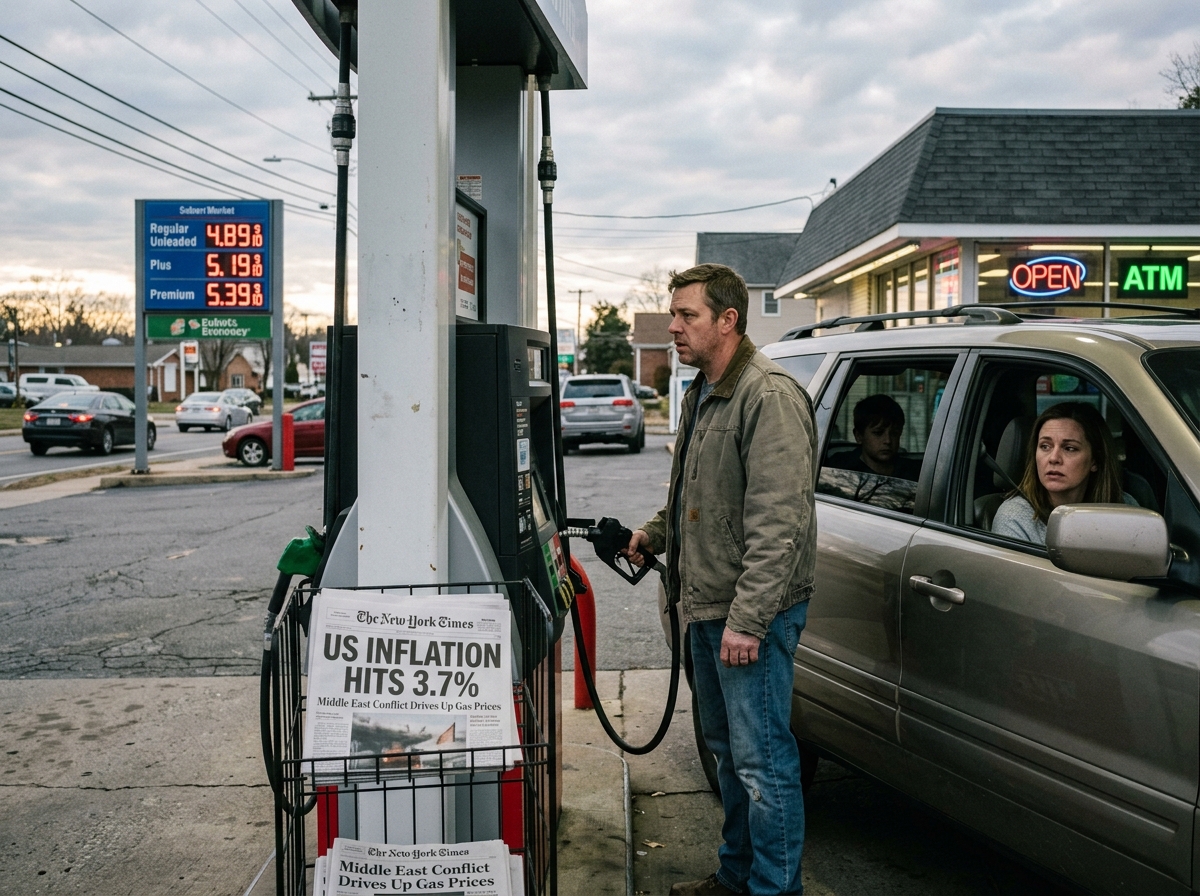
For millions of Americans, the economic consequences of wars thousands of miles away are becoming impossible to ignore.
The latest U.S. inflation figures, released Wednesday, show that consumer prices increased 3.7% over the 12 months ending in September, up from 3.4% in August.
The report from the Bureau of Labor Statistics reveals a sharp rise in energy costs, driven in significant part by the ongoing war involving Iran and disruptions to Middle Eastern oil supplies.
Gasoline prices climbed 9.1% in September alone and were 34.2% higher than a year earlier. Energy prices overall rose 20.4% over the past 12 months.
The numbers demonstrate how a geopolitical conflict can become a domestic financial problem, placing additional pressure on American commuters, businesses and families.
The War Is Reaching American Gas Stations
For ordinary Americans, gasoline is one of the most visible ways international insecurity affects household spending.
Military confrontation involving Iran, attacks on regional energy infrastructure and threats to shipping through the Strait of Hormuz have increased uncertainty in global petroleum markets.
Although the United States produces substantial quantities of oil, domestic gasoline prices remain influenced by international crude oil markets.
When global supply becomes more expensive or difficult to transport, American drivers can face higher prices even when the disruption occurs overseas.
According to AAA figures cited by the Associated Press, the nationwide average gasoline price was approximately $4.33 per gallon in mid-October, despite some easing during the preceding two weeks.
For a household purchasing 50 gallons a month, every additional dollar per gallon represents $50 in extra monthly spending.
For families already managing rent, insurance, medical bills and debt payments, higher transportation costs leave less money available for other necessities.
What About Grocery Prices?
The September report contains a more complicated picture for food.
Grocery prices actually declined by 0.1% during the month, although they remained 1.8% higher than a year earlier.
This means it would be misleading to claim that food prices surged across the board in September.
Nevertheless, sustained increases in fuel and shipping expenses could create additional pressure on grocery prices in future months.
Much depends on how long energy markets remain disrupted and how businesses respond.
For families, even modest price increases can be difficult when they accumulate on top of years of elevated living costs.
The Federal Reserve Faces a Security-Driven Inflation Problem
The September inflation report has also complicated the Federal Reserve's next interest-rate decision.
Consumer prices rose 0.6% in September, the largest monthly increase in five months.
Core inflation, which excludes food and energy, reached 2.6% annually.
The Federal Reserve aims to maintain inflation at 2% over time, meaning price growth remains above its target.
Financial markets responded to Wednesday's figures by increasing expectations that the central bank could raise interest rates at its October 27–28 meeting.
Higher rates may help contain domestic demand and prevent price increases from spreading more widely.
But they cannot directly reopen disrupted shipping routes, repair damaged oil facilities or end military confrontation.
That creates an uncomfortable dilemma.
If the Federal Reserve raises rates, mortgages, business financing and other borrowing costs may become more expensive.
If it holds rates steady while inflation spreads, American households could face prolonged pressure on purchasing power.
Faultline Brief Assessment: Wars Abroad, Economic Pressure at Home
The latest inflation figures highlight a connection increasingly important to American national security: economic resilience depends partly on the stability of global energy and trade networks.
The United States may be geographically distant from Middle Eastern battlefields, but its households remain exposed to international petroleum prices, supply disruptions and higher transportation costs.
The immediate danger is that an energy shock becomes a more persistent cost-of-living problem.
If businesses repeatedly increase prices to compensate for fuel and supply expenses, inflation can spread beyond the sectors most directly affected by war.
That would leave the Federal Reserve confronting higher prices while potentially slowing economic growth.
Diplomatic efforts to reduce international confrontation therefore carry economic implications as well as military and strategic ones.
For American families, the cost of conflict is no longer measured only in defense budgets or distant geopolitical risks. It is increasingly reflected in the price of gasoline, the cost of transportation and the purchasing power of the household paycheck.
Sources
Follow our reporting: Add Faultline Brief as a Preferred Source on Google →