Ukraine’s Winter Survival Test: Air Defenses, Energy Strikes and a Widening Rift With Washington
Ukraine faces a dangerous winter as Russian energy strikes, Patriot missile shortages and tensions with Washington test European support.
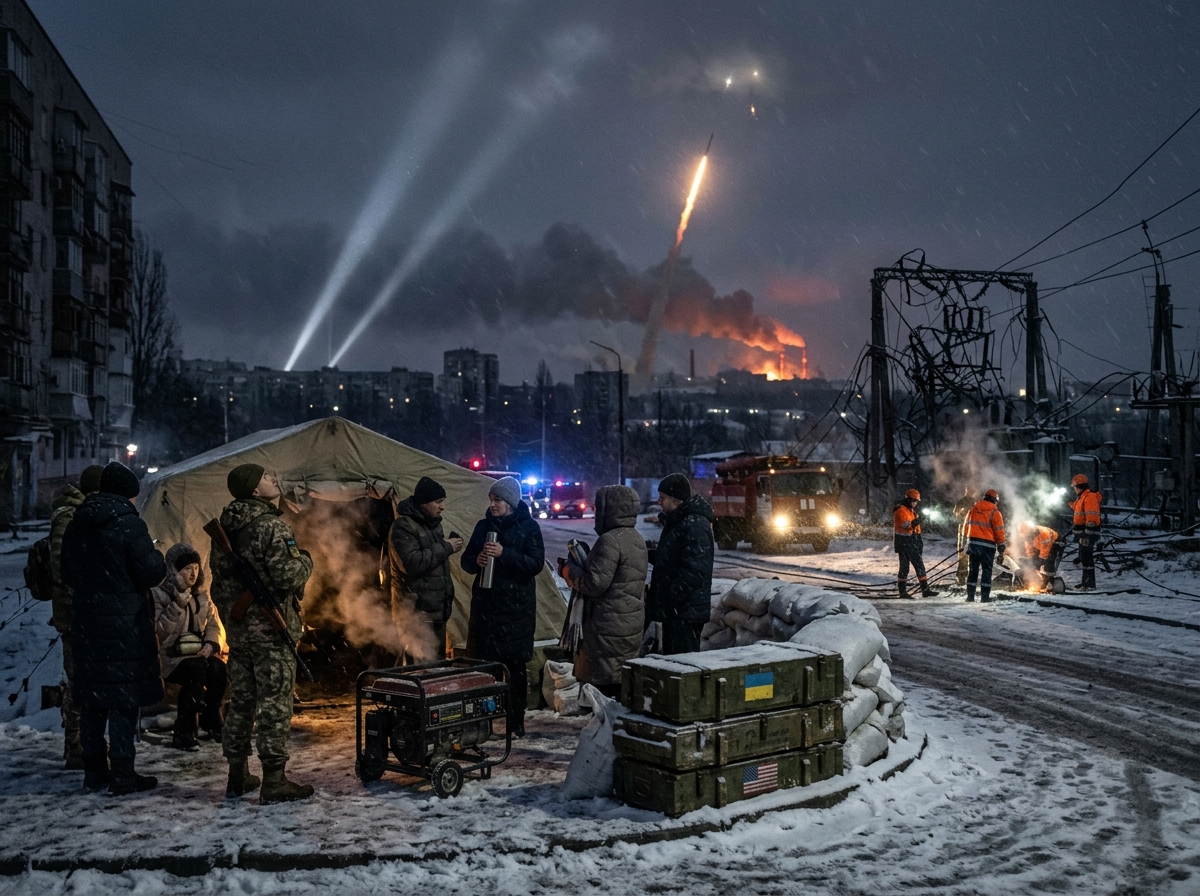
Ukraine is approaching another dangerous winter as intensified Russian attacks on energy infrastructure expose critical weaknesses in its air defenses, while growing differences between Kyiv and Washington place greater responsibility on European governments to sustain the country's war effort.
At a European Union summit in Brussels on October 16, Ukrainian President Volodymyr Zelenskyy appealed for additional financial and military assistance, warning that continued Russian bombardment threatens essential services as temperatures begin to fall.
The latest diplomatic tensions have brought three interconnected challenges into focus: Ukraine's shortage of advanced interceptor missiles, uncertainty over American support, and Europe's ability to finance a prolonged war.
Russia's Winter Strategy Targets Ukraine's Resilience
Russian missile and drone attacks have repeatedly targeted Ukrainian electricity infrastructure, creating the risk of widespread power outages during the coldest months of the year.
Recent strikes across nine Ukrainian regions disrupted electricity supplies to hundreds of thousands of households, according to Associated Press reporting. The attacks also injured civilians and caused additional damage to critical infrastructure.
The immediate consequences extend beyond the battlefield.
Electricity powers water distribution, heating systems, hospitals, telecommunications networks and essential public services. Sustained attacks on Ukraine's power infrastructure could therefore produce humanitarian emergencies far from active combat zones.
For Moscow, pressure on the energy system can serve a strategic purpose by increasing the economic and social costs of continued Ukrainian resistance. For Kyiv, protecting the power grid is increasingly inseparable from protecting civilian life.
The Patriot Missile Shortage
One of Ukraine's most urgent problems is the availability of interceptor missiles for its Western-supplied air defense systems.
Patriot batteries remain especially important because of their ability to intercept certain ballistic missile threats that other systems struggle to defeat.
Reports in mid-October indicated that Ukraine's interceptor reserves had become dangerously depleted after successive Russian attacks.
Zelenskyy subsequently said European partners possessed sufficient Patriot missiles to support Ukraine through the winter, although he acknowledged uncertainty about how many would ultimately be delivered.
That distinction is critical.
The existence of missiles in allied inventories does not guarantee their immediate availability to Ukraine. Governments must balance Ukrainian requirements against their own defense commitments, military readiness and procurement constraints.
Interceptor shortages also create difficult operational decisions. Ukrainian forces may be required to prioritize major cities, military installations and critical infrastructure while leaving other areas more vulnerable.
Washington and Kyiv Drift Further Apart
Ukraine's military difficulties have been compounded by a growing diplomatic disagreement with the United States.
President Donald Trump's efforts to reduce energy-market instability have brought Washington into conflict with Kyiv over Ukrainian strikes against Russian oil infrastructure.
Trump has criticized attacks on Russian refineries, arguing that they contribute to higher energy prices. Ukrainian leaders maintain that Russia's energy sector supports its ability to finance and sustain military operations.
The dispute reflects competing strategic priorities.
For Washington, limiting energy-price shocks has become an important economic and political consideration. For Ukraine, restricting Russian energy revenues and disrupting fuel infrastructure remain elements of its wartime strategy.
The disagreement has also raised wider concerns about the reliability of American military assistance, intelligence sharing and satellite communications.
Disruptions affecting satellite services used by Ukrainian forces have added to uncertainty over technologies that have become integral to modern battlefield operations.
Europe Faces a Financial and Strategic Test
As tensions between Washington and Kyiv deepen, European governments are being asked to assume a larger share of Ukraine's defense and financial burden.
During the Brussels summit, Zelenskyy sought additional European support to address a projected funding shortfall of approximately €70 billion for 2027.
European leaders reaffirmed their support for Ukraine, but agreement on the necessity of assistance does not automatically resolve disagreements over how to finance it.
The European Union faces competing demands involving defense spending, economic growth, energy affordability and domestic public finances.
Some member states remain reluctant to accept additional financial obligations, complicating efforts to establish a unified funding mechanism.
Nevertheless, European leaders increasingly recognize that Ukraine's stability has consequences for the wider continent.
A significant deterioration in Ukraine's military position could alter the European security environment, intensify displacement pressures and force governments to reconsider their long-term defense commitments.
The Wider Geopolitical Consequences
The coming months will test more than Ukraine's ability to defend its cities.
They will also test whether Europe can translate diplomatic commitments into timely military deliveries and predictable financial assistance.
Russia's campaign against Ukrainian infrastructure, the uncertain supply of advanced air defense missiles and shifting American priorities have created overlapping pressures that reinforce one another.
Should electricity infrastructure sustain further extensive damage, Ukraine could face mounting humanitarian needs even if its frontline defenses remain intact.
Conversely, reliable interceptor deliveries, emergency infrastructure repairs and stable European financing could strengthen Kyiv's ability to withstand another winter of sustained attacks.
For European governments, the central question is no longer simply whether to support Ukraine, but whether that support can arrive at the scale and speed required.
What Comes Next
Three developments will determine how this crisis evolves: the delivery of additional Patriot interceptors, the resilience of Ukraine's electricity network under continued attack, and the ability of European governments to agree on long-term financial support.
The coming winter could become another defining phase of the war, with civilian infrastructure, military supply chains and diplomatic alliances all facing simultaneous pressure.
Ukraine's immediate challenge is to keep its cities functioning and its air defenses operational.
Europe's challenge is to demonstrate that its promises can be converted into sustained protection before shortages and winter conditions deepen the crisis.
Sources
Follow our reporting: Add Faultline Brief as a Preferred Source on Google →