
Britain Deploys RAF Typhoon Jets to Defend Saudi Arabia Against Houthi Attacks
London expands its military support for Riyadh with fighter jets, transport aircraft and advisers, while ruling out offensive missions by British warplanes against Houthi targets in Yemen.
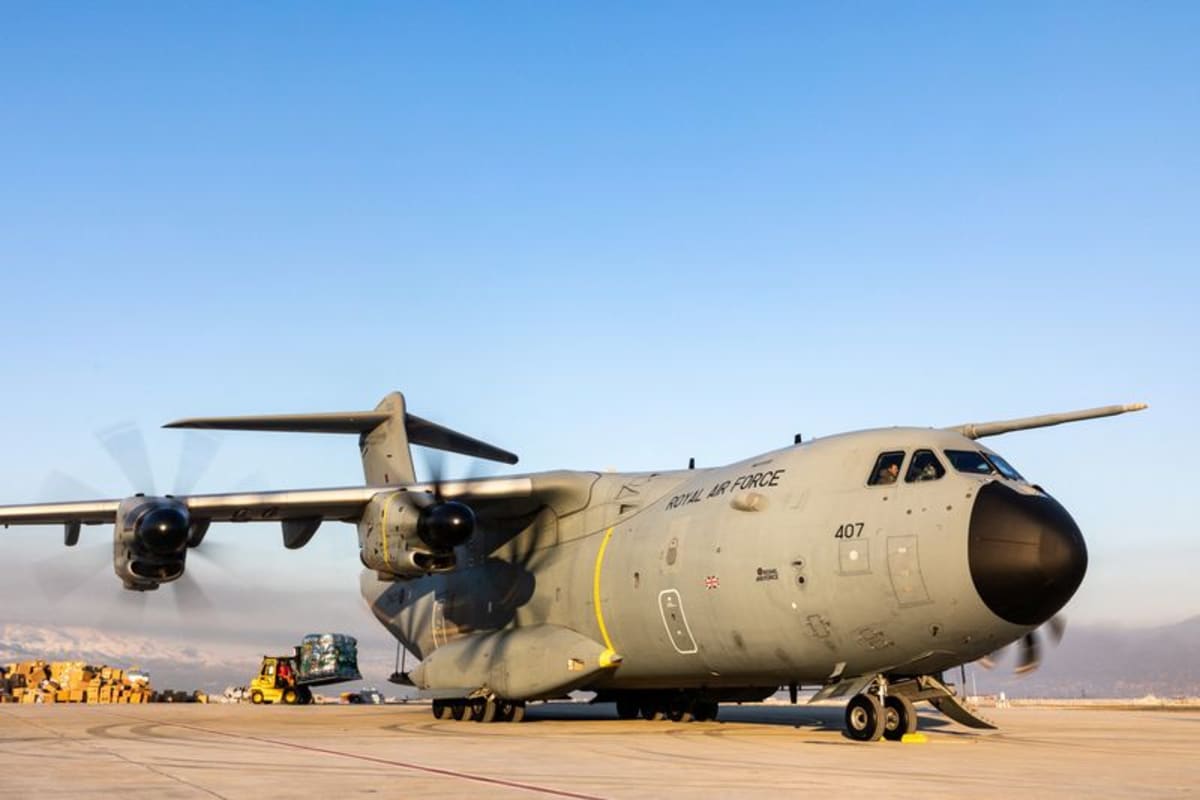
Britain has announced the deployment of Royal Air Force Typhoon fighter jets to defend Saudi Arabia against escalating Houthi missile and drone attacks, marking a significant expansion of London's military involvement in the kingdom's air defence.
The UK Ministry of Defence confirmed on Tuesday that the aircraft will conduct defensive air patrols to protect Saudi cities, civilian populations and critical infrastructure from aerial threats originating in Yemen.
The British government emphasized that its fighter jets will not carry out offensive strikes against Houthi positions, seeking to distinguish the new mission from direct participation in military operations inside Yemen.
The expanded assistance will also include an RAF A400M transport aircraft to move military equipment within Saudi Arabia and British military advisers to support Saudi officers.
The announcement follows renewed Houthi attacks on Saudi territory, including threats to Riyadh's King Khalid International Airport, as fighting in Yemen intensifies and regional governments confront growing security risks.
Britain Expands Its Military Role
The deployment represents a significant step beyond the defensive assistance Britain announced in September, when London agreed to provide an RAF Voyager aerial refuelling aircraft to support Saudi operations.
Under the latest arrangements, British Typhoon fighters will take a more direct role in protecting Saudi airspace by intercepting hostile drones and missiles.
The aircraft are designed for air defence and interception missions, allowing them to respond to airborne threats before they reach populated areas or strategically important facilities.
British Defence Secretary Wes Streeting said the decision reflected growing concern about attacks on Saudi civilian infrastructure.
Why Saudi Arabia Matters to British Security
Britain has longstanding defence and economic ties with Saudi Arabia, including military cooperation, training and support for air defence capabilities.
The latest deployment reinforces London's commitment to Saudi security at a time when regional instability threatens energy supplies and international commerce.
Saudi Arabia is one of the world's leading oil exporters, and its energy infrastructure plays an important role in global markets.
Disruption to Saudi production or transportation networks could contribute to higher energy prices and wider economic uncertainty.
The British government has explicitly connected its decision to the potential domestic consequences of instability in the Gulf, including increased costs for businesses and households.
The mission therefore reflects more than a bilateral military arrangement.
It illustrates how threats originating in Yemen can influence the security calculations of countries far beyond the Arabian Peninsula.
The Limits of Britain's Defensive Mission
London has sought to establish a clear boundary around the new operation.
According to the Ministry of Defence, British Typhoon aircraft will defend Saudi airspace but will not conduct offensive strikes against the Houthis.
The restriction appears intended to strengthen Saudi Arabia's ability to protect itself without drawing British combat aircraft into attacks inside Yemen.
Nevertheless, the distinction between defensive assistance and involvement in a wider military campaign may face scrutiny as the conflict develops.
The UK is providing several forms of support simultaneously, including air defence equipment, military advisers, transport capabilities and aerial refuelling.
While these activities have different operational purposes, together they deepen Britain's military cooperation with Saudi Arabia.
The deployment also creates potential operational risks if British aircraft encounter incoming missiles or drones during periods of heightened confrontation.
A successful defensive mission could reduce the damage caused by Houthi attacks. However, it would not address the political and military disputes underlying Yemen's conflict.
What the Deployment Means for Regional Security
The introduction of British fighter patrols adds another international dimension to the conflict surrounding Yemen.
It strengthens Saudi Arabia's defensive capabilities while demonstrating that the security of the kingdom remains a priority for Western partners.
It may also complicate Houthi military planning by increasing the resources available to detect and intercept aerial attacks.
However, the effectiveness of the operation will depend on the scale of the deployment, coordination with Saudi forces and the nature of future attacks.
The British government has not indicated that the mission will be accompanied by a broader diplomatic breakthrough.
For now, the immediate objective is to reduce the threat to Saudi cities and infrastructure.
The wider strategic question is whether additional international military support can contain the escalation long enough for renewed negotiations—or whether continued Houthi attacks will draw outside powers into an increasingly complicated regional confrontation.
Britain's deployment underscores a growing reality: Yemen's conflict is no longer only a domestic battlefield, but a persistent threat to regional security, international trade and the interests of governments far beyond the Middle East.
Sources
Follow our reporting: Add Faultline Brief as a Preferred Source on Google →