Trump, Xi and Putin Meet in Historic Shenzhen Summit: Expectations, Outcomes and the Future of World Order
The historic Trump-Xi-Putin summit in Shenzhen brought together the leaders of three nuclear-armed powers for unprecedented trilateral talks. Despite a four-point declaration on nuclear risks, energy supplies, UN reform and international legal jurisdiction, the meeting produced no major breakthrough on Ukraine, Iran or Taiwan. Faultline Brief examines the expectations, outcomes and implications for global security.
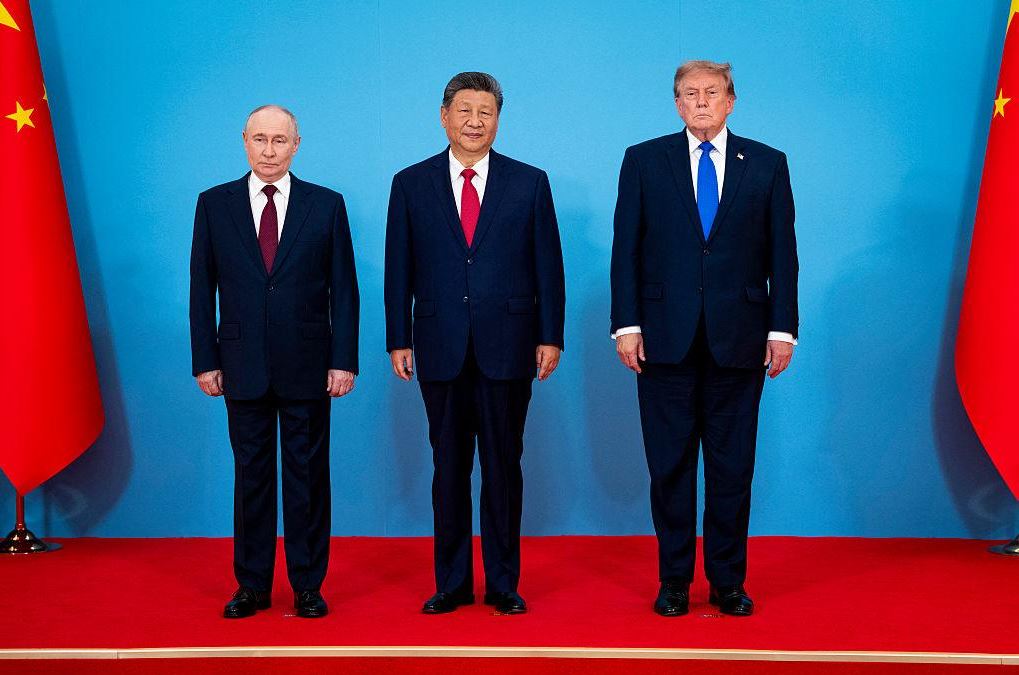
SHENZHEN, China — In one of the most consequential diplomatic encounters of the post-Cold War era, US President Donald Trump, Chinese President Xi Jinping and Russian President Vladimir Putin gathered in Shenzhen on November 19 for an unprecedented trilateral summit that raised expectations of a possible realignment in global power relations.
Held on the sidelines of the Asia-Pacific Economic Cooperation (APEC) summit, the meeting brought together the leaders of three nuclear-armed powers whose competing interests shape conflicts, trade, security alliances and diplomatic negotiations across the world.
The summit produced a four-point joint declaration addressing nuclear risk reduction, international energy supplies, United Nations reform and the jurisdiction of international courts. Yet it delivered no publicly announced settlement on the wars in Ukraine and Iran, no breakthrough on Taiwan and no binding nuclear arms control agreement.
The central significance of the meeting may therefore lie less in its immediate agreements than in its demonstration that Washington, Beijing and Moscow remain willing to engage directly despite deep strategic disagreements.
ALSO READ: Ukraine Nuclear Meltdown Risk Grows as Russian Attacks Threaten Power Grid, Regulators Warn
Why the Shenzhen Summit Was Historically Significant
The meeting was the first face-to-face trilateral summit involving the serving presidents of the United States, China and Russia.
Its historical symbolism was difficult to ignore.
In February 1945, US President Franklin D. Roosevelt, British Prime Minister Winston Churchill and Soviet leader Joseph Stalin met at Yalta to discuss the future of Europe and the international order as World War II approached its conclusion.
The Shenzhen summit revived comparisons with that era of great-power diplomacy, although the circumstances were fundamentally different.
Unlike the wartime allies at Yalta, the three countries meeting in Shenzhen are strategic competitors with sharply conflicting interests.
The United States remains committed to alliances in Europe and the Indo-Pacific. China seeks a greater role in shaping international institutions while challenging aspects of American regional dominance. Russia is engaged in a prolonged war against Ukraine and remains in confrontation with NATO.
Shenzhen did not reproduce the Yalta framework. It instead demonstrated the continuing influence of major-power diplomacy in a fragmented international system.
For smaller countries, the meeting also raised an important question: whether future security arrangements will be negotiated through inclusive international institutions or increasingly through direct bargaining among the largest powers.
Three Leaders, Three Different Expectations
Although the summit brought the leaders together, their objectives were not identical.
Donald Trump: Nuclear Diplomacy and Conflict Management
Trump entered the meeting seeking direct engagement with both China and Russia.
One of Washington's central concerns was the future of nuclear arms control following the expiration of New START, the last major bilateral strategic nuclear arms treaty between the United States and Russia, in February 2026.
Trump has advocated broader nuclear discussions involving China, whose arsenal remains smaller than those of the United States and Russia but is expanding.
The US president also sought diplomatic opportunities related to the war in Ukraine and the conflict involving Iran.
However, the absence of detailed advance negotiations and the competing interests of the three governments limited expectations of major agreements.
Xi Jinping: Strategic Stability and China's Global Role
For Xi Jinping, hosting the summit offered an opportunity to demonstrate China's diplomatic influence.
Beijing has promoted the idea that major powers should manage disagreements through dialogue while respecting sovereignty and avoiding direct confrontation.
The meeting also allowed China to present itself as an indispensable participant in global security discussions, rather than simply an economic competitor of the United States.
At the same time, Beijing had little reason to abandon its established positions on Taiwan, trade restrictions or regional security.
Vladimir Putin: Diplomatic Engagement and Russia's International Position
For Putin, the meeting provided an opportunity to engage directly with Washington and Beijing while Russia continued its war in Ukraine.
Moscow has sought recognition of its security concerns and a continuing role in negotiations affecting European security.
Participation alongside the American and Chinese presidents reinforced Russia's visibility in major-power diplomacy.
Nevertheless, the summit produced no announced agreement addressing the central disputes between Moscow, Kyiv and Ukraine's international supporters.
What Did the Three Leaders Actually Agree?
The most concrete result was a four-point joint declaration.
1. Nuclear Risk Reduction
The leaders reaffirmed the principle that nuclear war cannot be won and must never be fought.
They also agreed to pursue dialogue on reducing nuclear risks and preventing nuclear proliferation.
This was a meaningful diplomatic acknowledgment of the dangers posed by strategic competition.
However, the declaration did not establish a new nuclear treaty, set numerical limits on warheads or announce a verification mechanism.
The distinction matters: a commitment to dialogue is not equivalent to a binding arms control agreement.
2. Energy Security and Oil Supplies
The three governments agreed on the importance of stable international energy supplies and increasing the availability of petroleum products.
Energy security has become increasingly important amid geopolitical tensions affecting oil-producing regions and major shipping routes.
Disruption in the Strait of Hormuz and other strategic waterways can influence inflation, manufacturing costs and global trade.
The declaration, however, did not provide detailed production quotas or an implementation timetable.
3. Reform of the United Nations
The leaders supported reforming the United Nations to improve its ability to respond to international challenges.
All three countries are permanent members of the UN Security Council and possess veto power.
Their agreement on the need for reform was significant in principle, but the declaration did not establish a common blueprint for changes to the Security Council or wider UN institutions.
Disagreements over representation, veto authority and international intervention remain unresolved.
4. International Criminal Court Jurisdiction
The declaration emphasized state consent and respect for the immunities of state officials, while expressing concern about the exercise of jurisdiction by the International Criminal Court and similar institutions.
This provision carried particular political significance because the ICC has issued an arrest warrant for Putin over alleged war crimes involving the unlawful deportation and transfer of Ukrainian children.
Russia rejects the court's authority over its president.
The declaration did not remove the warrant or change the ICC's legal obligations.
Ukraine: The Most Important Missing Breakthrough
The war in Ukraine was among the major issues surrounding the summit, but the final declaration contained no specific peace agreement.
There was no announced ceasefire, withdrawal timetable, territorial settlement or security guarantee.
For Ukraine and its European partners, this absence was consequential.
Any sustainable settlement would require addressing Ukraine's sovereignty, territorial security and the mechanisms needed to implement an agreement.
The Shenzhen summit demonstrated that the three powers could discuss international security, but it did not establish a framework for ending the war.
The risk for European governments is that direct diplomacy among Washington, Beijing and Moscow could affect the broader security environment without necessarily resolving the concerns of countries most directly affected by the conflict.
Iran and the Strait of Hormuz: Economic Stakes Without a Settlement
The conflict involving Iran was another issue surrounding the meeting.
Washington has sought cooperation to reduce nuclear proliferation risks and protect energy flows through the Strait of Hormuz.
China has strong economic interests in uninterrupted international trade and energy supplies, while Russia maintains its own strategic relationship with Tehran.
These interests create opportunities for limited cooperation but do not eliminate major disagreements.
The joint declaration addressed energy security and nuclear risks in general terms.
It did not announce an agreement ending the Iran conflict, resolving disputes over Iran's nuclear program or establishing a new regional security framework.
For global markets, the unresolved situation remains a source of uncertainty.
Taiwan and the Indo-Pacific: Strategic Rivalry Remains
Taiwan represents another major fault line between the United States and China.
Beijing claims sovereignty over Taiwan and has not renounced the use of force to achieve unification.
Taiwan maintains its own democratic government, while Washington provides defensive support under its longstanding policy framework.
A military crisis in the Taiwan Strait could disrupt global semiconductor supplies, maritime trade and regional security.
Despite the summit's language about strategic stability, no publicly announced agreement changed the fundamental positions of Washington and Beijing on Taiwan.
The South China Sea, US alliances in the Indo-Pacific and competition over advanced technology also remain important areas of tension.
The Shenzhen meeting therefore created a channel for high-level communication without resolving the strategic rivalry shaping Asia-Pacific security.
Did the Summit Change the Global Balance of Power?
The meeting demonstrated that the United States, China and Russia can engage directly on selected international questions.
But it did not create a formal three-power alliance or establish a new international security organization.
The three governments retain different interests, alliances and economic relationships.
China and Russia have developed close strategic cooperation, while Washington maintains extensive alliances across Europe and Asia.
The summit's diplomatic symbolism was substantial because it brought competing powers together at a time of heightened international instability.
Its practical influence will depend on whether the commitments announced in Shenzhen develop into sustained negotiations, specific agreements and measurable changes in government policy.
For other countries, including European states, India, Japan and members of ASEAN, the meeting reinforces the importance of maintaining diplomatic engagement while protecting their own strategic interests.
Five Future Threats After Shenzhen
Renewed Nuclear Competition
Without a replacement for New START, the United States and Russia lack the treaty's former framework of binding strategic nuclear limits. Bringing China into future discussions will remain difficult because of differences in arsenal size and strategic priorities.
Escalation in Ukraine
The absence of a peace agreement leaves the war unresolved, with continuing risks of military escalation and wider tensions between Russia and NATO.
A Taiwan Strait Crisis
Military pressure, political disputes and potential miscalculation could produce a confrontation involving China, Taiwan and the United States.
Energy Supply Disruption
Continued instability around Iran and major maritime chokepoints could threaten international shipping, energy prices and economic growth.
Weakening International Institutions
If major powers increasingly rely on exclusive negotiations while failing to strengthen multilateral mechanisms, smaller countries may face greater uncertainty over international rules and security commitments.
These are potential risks, not inevitable outcomes.
Conclusion: A Historic Meeting, but Not a New World Order
The Shenzhen summit was extraordinary because of who attended, the geopolitical circumstances and the symbolism of three major powers discussing global stability together.
Its outcome was more limited.
Trump, Xi and Putin agreed on broad principles involving nuclear risks, energy supplies, UN reform and international legal jurisdiction.
They did not announce comprehensive settlements to the conflicts in Ukraine or Iran, resolve the Taiwan dispute or establish a new arms control regime.
The meeting may be remembered as the beginning of a new phase of great-power dialogue, but that assessment will depend on what follows.
The decisive test is whether the three governments can translate diplomatic statements into verifiable agreements that reduce conflict risks without undermining the security and sovereignty of other states.
For now, Shenzhen represents an important diplomatic opening rather than a fundamental restructuring of the international order.
Sources
Follow our reporting: Add Faultline Brief as a Preferred Source on Google →