COP31 Collapse: The Climate Cost of Failed Talks and the World's Next Great Fault Line
The Antalya climate summit ended without an overarching agreement on fossil fuels and climate finance. The consequences extend beyond rising temperatures to food security, migration, economic inequality and international stability.
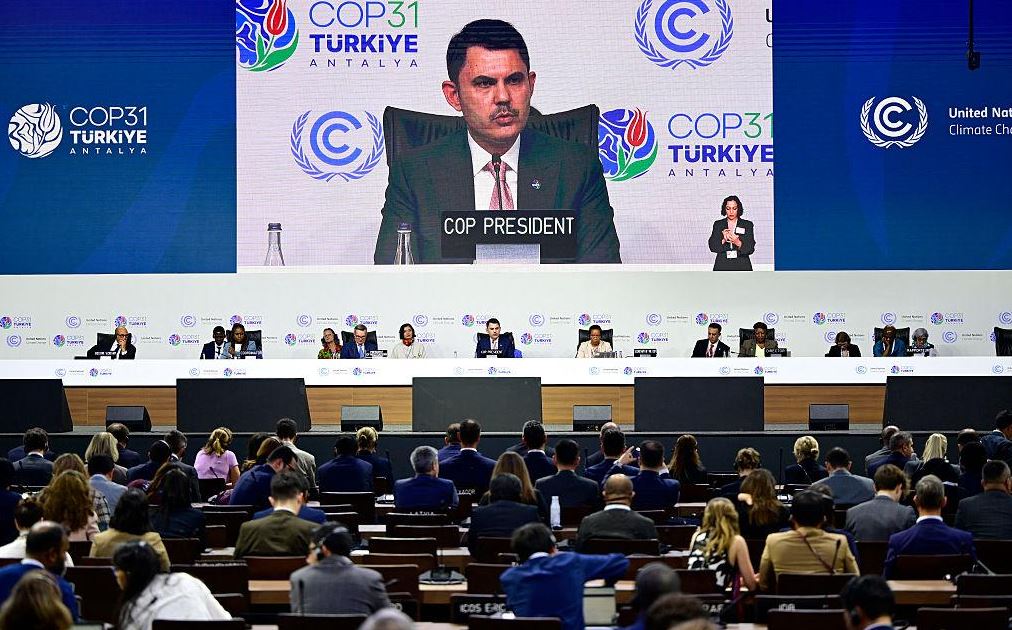
The collapse of the COP31 climate negotiations has exposed a widening geopolitical divide over who should reduce greenhouse gas emissions, who should finance the transition to cleaner energy and who will bear the economic consequences of a warming planet.
After more than two weeks of negotiations, the United Nations climate conference ended on November 22 without agreement on its proposed overarching declaration, the Antalya Pact. The dispute centered on fossil fuels, financial support for vulnerable countries and competing approaches to reducing emissions.
For the international climate system, the immediate consequence is a missed opportunity to strengthen collective action. For countries already experiencing destructive floods, droughts, extreme heat and rising seas, the longer-term concern is that delayed emissions reductions and insufficient adaptation investment will increase the human and economic costs of climate change.
The failure does not invalidate the Paris Agreement or existing national commitments. But it raises a more fundamental question: can governments manage a global environmental crisis when their economic and strategic interests increasingly pull them in different directions?
Why COP31 Failed: Fossil Fuels at the Center of the Dispute
The conference, hosted in Antalya under a Turkish presidency with Australia leading negotiations, brought together representatives of nearly 200 countries.
The most contentious issue was whether the final declaration should explicitly address the transition away from coal, oil and natural gas.
The European Union and several climate-vulnerable countries argued that a document failing to acknowledge fossil fuels would represent a retreat from previous international commitments.
Saudi Arabia, Russia and other fossil-fuel-producing countries opposed language they considered restrictive or insufficiently attentive to energy security and economic development.
The disagreement reflected a deeper division over how the energy transition should proceed.
Countries dependent on oil and gas revenues have concerns about employment, public finances, industrial competitiveness and the availability of affordable energy.
Many climate-vulnerable countries, meanwhile, argue that continued fossil-fuel dependence exposes their populations to increasingly destructive climate impacts despite their relatively small historical contribution to global emissions.
Negotiators also disagreed over carbon capture and removal technologies. Some governments see these technologies as necessary for reducing emissions from difficult-to-decarbonize industries. Critics warn that excessive reliance on future carbon removal could delay reductions in fossil-fuel consumption.
The final proposed text failed to bridge these differences. The conference ended without adopting the Antalya Pact.
What Did the World Actually Lose?
The failure of COP31 does not produce an immediate, measurable rise in global temperature.
A single conference cannot be assigned a precise number of additional degrees of warming, deaths or dollars in damage without assumptions about how governments would otherwise have acted.
The real cost lies in the possibility of delayed action.
Carbon dioxide accumulates in the atmosphere, and much of its warming effect persists for long periods. Every year of high emissions adds to the cumulative total that determines future warming.
If governments postpone emissions reductions, achieving the same long-term temperature objective generally requires faster and more demanding reductions later.
Delay can also lock countries into long-lived infrastructure, including power plants, industrial facilities and transport systems that depend on fossil fuels.
At the same time, insufficient adaptation investment leaves communities more exposed to floods, heatwaves, water shortages and coastal erosion.
COP31's failure is therefore best understood as an increase in policy uncertainty and a lost opportunity to accelerate coordinated action, rather than as a disaster with an immediately calculable price tag.
The Climate Fault Line: Rich Countries, Poor Countries and Historical Responsibility
The deepest division in climate diplomacy is not simply between countries that support environmental protection and those that oppose it.
It concerns the distribution of responsibility, financial resources and development opportunities.
Industrialized economies accumulated wealth during periods of intensive fossil-fuel use and account for a substantial share of historical carbon dioxide emissions.
Many developing countries have contributed comparatively little to cumulative emissions but face severe exposure to climate hazards.
They also require affordable energy, transport infrastructure, industrial growth and poverty reduction.
For vulnerable countries, the question is whether the international system will provide enough finance and technology to support development without repeating the emissions-intensive pathways of earlier industrialization.
For wealthier countries, the challenge involves balancing international financial commitments with domestic political pressures, energy prices and competing budget priorities.
These disagreements are central to climate justice.
Without a credible arrangement for sharing the costs of mitigation, adaptation and climate-related losses, international negotiations will continue to face resistance.
Climate Finance: The Unresolved Economic Battle
One of COP31's most consequential disputes involved funding to help poorer countries adapt to climate change.
Negotiators discussed stronger financial commitments, but failed to reach consensus on a clear new adaptation-finance target within the overarching pact.
Adaptation includes flood defenses, drought-resistant agriculture, resilient roads, improved water systems, early-warning networks and healthcare preparations for extreme heat.
These investments can reduce future losses, but they require financing before disasters occur.
Developing countries often face high borrowing costs, limited public resources and competing demands for education, healthcare and infrastructure.
Climate finance is consequently more than an environmental issue. It is connected to sovereign debt, development inequality and international economic relations.
Without reliable financing, vulnerable governments may face difficult choices between responding to immediate disasters and investing in long-term protection.
The resulting pressures could deepen economic inequality and make future climate negotiations more contentious.
From Environmental Crisis to Geopolitical Fault Line
Climate change can intensify existing political and economic vulnerabilities, although it rarely acts as the sole cause of conflict.
Extreme weather can damage agricultural production, strain water supplies, destroy infrastructure and displace communities.
Where institutions are weak or resources are already contested, these pressures may worsen grievances and increase the difficulty of maintaining public services.
Climate impacts also cross national borders.
A drought affecting several countries can influence food markets and migration. Flooding in an important manufacturing region can interrupt international supply chains. Rising seas can threaten ports, coastal cities and strategically important infrastructure.
These consequences connect climate change directly to national security and foreign policy.
The central geopolitical fault line is increasingly between countries with the financial and technological capacity to protect themselves and those facing greater exposure with fewer resources.
South Asia: A Frontline of Climate Vulnerability
South Asia illustrates how climate risks intersect with development, water security and regional stability.
Pakistan has experienced devastating floods, while extreme heat and water stress remain major concerns across the region.
India faces challenges involving heat exposure, agricultural productivity, urban flooding and water demand.
Bangladesh is particularly vulnerable to coastal flooding, cyclones, salinity intrusion and population displacement.
Changes in Himalayan glaciers and snowpack introduce additional uncertainty into long-term water management.
The Indus, Ganges and Brahmaputra river systems support large populations and agricultural economies across national borders.
Climate change does not automatically lead to conflict over these resources. However, changes in water availability, combined with political disputes and weak cooperation, could increase pressure on already sensitive relationships.
For South Asian governments, climate resilience should therefore be considered alongside food security, economic planning and regional diplomacy.
The Arctic: Warming Creates New Strategic Competition
The Arctic represents another intersection between climate change and geopolitical competition.
Rising temperatures are reducing sea-ice coverage and changing access to some northern maritime routes and resources.
These developments have attracted attention from Russia, the United States, China and European governments.
New shipping opportunities could reduce travel distances on certain routes, but harsh conditions, infrastructure gaps and environmental hazards remain significant obstacles.
At the same time, Arctic warming threatens ecosystems, Indigenous communities and infrastructure built on frozen ground.
The region demonstrates a central contradiction of climate geopolitics: environmental damage can create new commercial and strategic opportunities while simultaneously increasing risks to communities and ecosystems.
Food Security, Migration and Economic Instability
The future costs of climate change extend beyond direct physical damage.
Higher temperatures can reduce labor productivity, particularly in agriculture, construction and other outdoor occupations.
Extreme weather can disrupt harvests, increase food-price volatility and damage transport infrastructure.
Insurance costs may rise in high-risk regions, while some properties and public assets become increasingly expensive to protect.
Migration is another potential consequence.
Most climate-related displacement occurs within national borders, but repeated disasters and declining livelihoods can also contribute to cross-border movement.
The relationship between climate change and migration is complex. Economic conditions, governance, family networks and national policies all influence where people move.
Nevertheless, insufficient adaptation could increase pressure on urban services, housing, employment and public finances.
For governments, climate resilience is increasingly an economic and social stability requirement rather than a separate environmental policy.
Can Clean Energy Progress Without a Global Agreement?
Despite the failure to adopt the Antalya Pact, COP31 did not end without any progress.
A voluntary initiative to increase electricity's share of global final energy consumption to 35 percent by 2035 attracted support from numerous countries.
Governments also continued work on methane reductions, forest protection, resilience and other aspects of climate policy.
These developments illustrate that clean-energy investment and national climate action can proceed even when negotiations fail to produce a comprehensive declaration.
Solar power, wind energy, batteries and electrification have become important areas of industrial investment and technological competition.
However, expanding clean electricity alone will not eliminate emissions from aviation, shipping, agriculture, heavy industry and fossil-fuel production.
The challenge is to combine technological progress with policies that deliver measurable emissions reductions across entire economies.
Carbon capture and removal may contribute in particular sectors, but their cost, scalability and effectiveness require careful assessment.
Five Future Climate Threats After COP31
1. A Longer and More Severe Overshoot of 1.5°C
The world is increasingly expected to exceed the Paris Agreement's 1.5°C temperature threshold, at least temporarily.
The duration and magnitude of that overshoot will influence future risks to ecosystems, coastal communities and human health.
Rapid emissions reductions could still limit additional warming and reduce the severity of long-term impacts.
2. Widening Climate Inequality
Countries with strong institutions and greater financial resources may adapt more effectively than poorer nations.
Without sufficient international support, climate impacts could widen existing differences in health, infrastructure, food security and economic opportunity.
3. Water and Food Security Pressures
Changing rainfall patterns, heat extremes and glacier retreat could increase pressure on agricultural production and water management.
The greatest risks may arise where environmental stresses overlap with poverty, weak governance and existing political disputes.
4. Economic Fragmentation and Energy Competition
Competition over clean-energy technologies, critical minerals, manufacturing capacity and supply chains could become more intense.
Trade restrictions and geopolitical rivalry may complicate the deployment of affordable low-carbon technologies.
5. Loss of Confidence in Climate Diplomacy
Repeated disagreements could weaken confidence in the ability of annual climate summits to produce meaningful collective action.
Countries may increasingly pursue smaller coalitions, regional agreements and unilateral policies, creating both opportunities for faster progress and risks of fragmentation.
These threats are conditional scenarios, not predetermined outcomes.
COP32 in Ethiopia: What Must Change?
The next UN climate conference, COP32, is scheduled to take place in Ethiopia in 2027.
It will inherit unresolved questions about fossil-fuel transition pathways, adaptation finance and the credibility of collective climate commitments.
The next phase of diplomacy will need to address not only the ambition of proposed targets but also their implementation.
Three issues will be particularly important: whether governments can agree on practical pathways for reducing fossil-fuel dependence; whether vulnerable countries can obtain predictable adaptation finance; and whether national commitments translate into verifiable emissions reductions.
The international community will also need to consider how climate negotiations can function effectively amid geopolitical competition, debt pressures and domestic political disagreements.
Conclusion: The Climate Crisis Will Continue Beyond COP31
The collapse of COP31 marks a setback for multilateral climate diplomacy, but it does not determine the planet's future.
Existing climate agreements remain in force, clean-energy technologies continue to develop and governments retain the ability to strengthen domestic policies.
The danger is that political delay will allow additional emissions to accumulate while communities face growing climate risks.
For Faultline Brief, climate change belongs at the center of geopolitical analysis because it intersects with energy security, international inequality, migration, strategic competition and the stability of states.
The world's next great fault line may not be defined by a disputed border or military confrontation.
It may instead emerge from a widening divide between those able to withstand a changing climate and those forced to bear its consequences with inadequate resources.
COP31 ended without an overarching agreement. The consequences of the decisions governments make next will extend far beyond the negotiating halls of Antalya.
Sources
Follow our reporting: Add Faultline Brief as a Preferred Source on Google →