South China Sea Crisis: Could a China–Philippines Clash Draw the United States Into War?
As Beijing intensifies maritime patrols and Manila strengthens security ties with Washington and Tokyo, disputed waters in the Indo-Pacific are emerging as a dangerous test of American military commitments and China's regional ambitions.
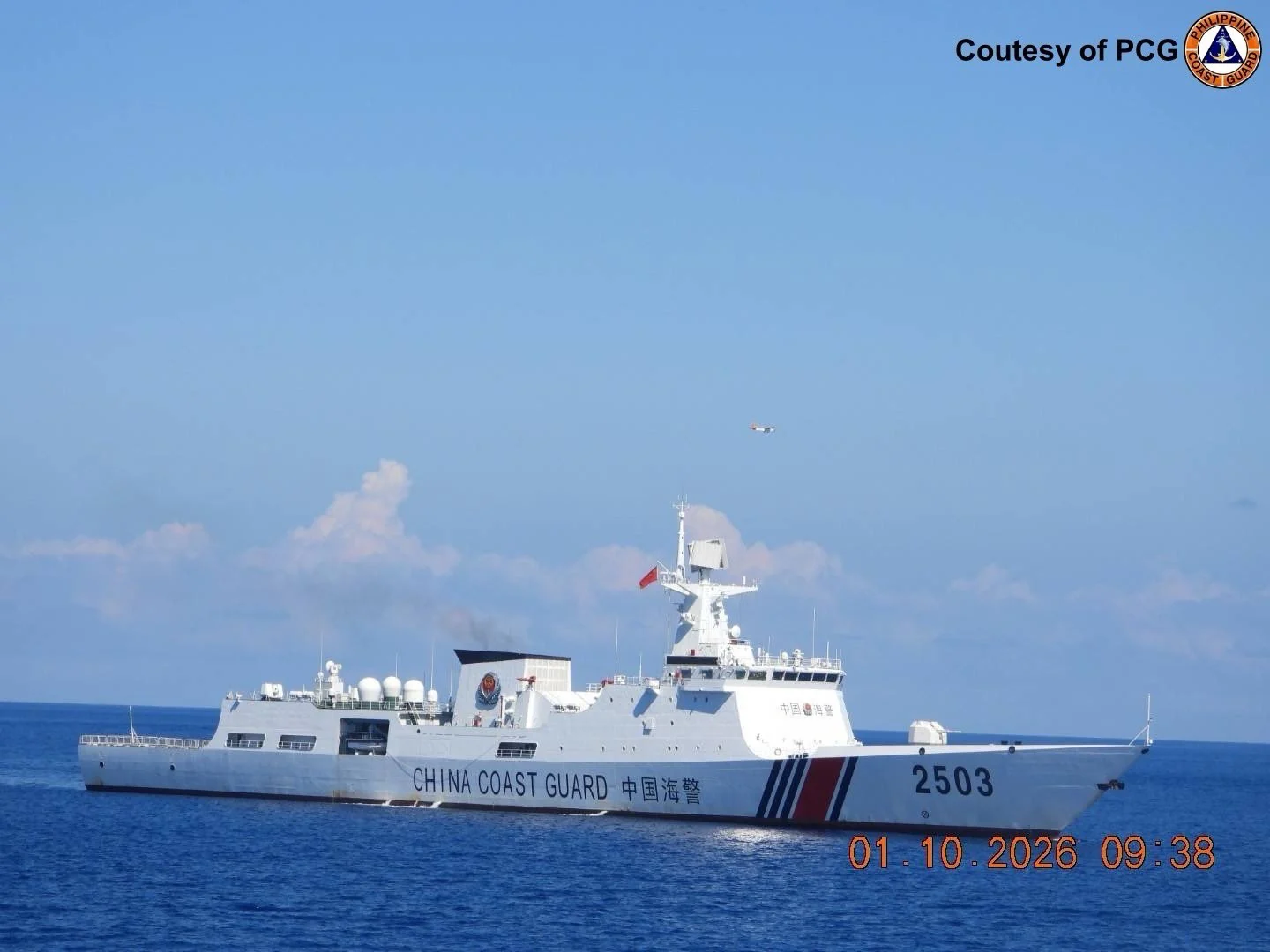
The South China Sea is emerging as one of the world's most dangerous geopolitical flashpoints, where a collision between coast guard vessels, a confrontation over disputed islands or an accidental military encounter could trigger a crisis involving the United States and China. Recent Chinese military patrols around Scarborough Shoal, increasingly confrontational exchanges with the Philippines and a new Japanese security assistance agreement with Manila underline the growing international stakes of a maritime dispute that extends far beyond competing territorial claims. The immediate danger is not necessarily a deliberate decision by Beijing or Washington to start a war. It is the possibility that repeated confrontations at sea could produce an incident serious enough to activate security commitments, provoke military retaliation or create political pressure that makes compromise difficult.
For the Philippines, the dispute concerns sovereignty, fishing access, offshore energy resources and the right to operate within its internationally recognized maritime zones. For China, it is connected to territorial claims, strategic access and resistance to what Beijing views as external interference in regional affairs.
For Washington, the stakes are different but equally significant: the credibility of its defense alliance with Manila, freedom of navigation through strategically important waters and the balance of power across the Indo-Pacific.
A New Wave of Confrontations
The latest tensions have developed through a series of maritime encounters and increasingly sharp diplomatic exchanges.
On October 30, China's People's Liberation Army announced naval and air combat-readiness patrols around Scarborough Shoal, a disputed feature claimed by both China and the Philippines. Beijing described the operations as a response to what it considered provocative Philippine activities.
Earlier, on October 20, Chinese forces monitored a US Navy warship near Sabina Shoal. Beijing accused the American vessel of entering disputed waters without authorization, while the broader confrontation reflected Washington's determination to challenge maritime restrictions it considers inconsistent with international law.
The political atmosphere deteriorated further after China's ambassador to the Philippines suggested that Beijing could prevail militarily against Manila, while emphasizing that China did not want to use force. Philippine President Ferdinand Marcos Jr. described the remarks as threatening.
Chinese Foreign Minister Wang Yi subsequently urged Philippine Foreign Secretary Theresa Lazaro to exercise caution. Despite the disagreement, both governments expressed support for continued diplomatic communication.
These developments demonstrate the central contradiction in the dispute: Beijing and Manila want to avoid open conflict, yet both are increasingly unwilling to retreat from positions they consider fundamental to national sovereignty.
Why Scarborough Shoal Matters
Scarborough Shoal, known as Bajo de Masinloc in the Philippines and Huangyan Dao in China, is one of the most sensitive areas of the dispute.
Located west of the Philippine island of Luzon, the shoal has become a focal point for competing maritime patrols, fishing activities and demonstrations of state authority.
China has maintained effective control over access to the shoal since 2012, while the Philippines continues to assert its territorial claim and defend Filipino fishermen's access.
The situation is particularly dangerous because the vessels involved are frequently coast guard ships rather than conventional naval warships.
Such encounters fall into a gray area between civilian law enforcement and military confrontation. Water cannons, blocking maneuvers and collisions may be intended to establish control without firing weapons, but they can still cause serious injuries or fatalities.
The Council on Foreign Relations documented multiple confrontations in July 2026 involving Chinese and Philippine vessels near Scarborough Shoal and Second Thomas Shoal.
A single fatal encounter could transform a recurring maritime dispute into a much larger security crisis. The US–Philippines Defense Treaty Raises the Stakes
The most consequential international dimension of the South China Sea dispute is the US–Philippines Mutual Defense Treaty.
Under the 1951 agreement, both countries have commitments concerning armed attacks against their forces, public vessels and aircraft in the Pacific. Washington has repeatedly affirmed that these commitments extend to relevant attacks in the South China Sea.That creates a potentially dangerous escalation pathway.
If a Philippine military vessel or coast guard ship were subjected to an armed attack, Manila could seek American assistance under the treaty.
However, the treaty does not mean that every collision, water-cannon incident or confrontation automatically requires the United States to enter a war. The legal classification of an incident, its severity and the political decisions of both governments would matter.
China may believe it can apply pressure through coast guard operations without crossing the threshold of an armed attack. The Philippines, meanwhile, may regard repeated coercive actions as an unacceptable threat to its sovereignty and maritime rights.
The danger lies in the possibility that the two sides interpret the same encounter differently.
Washington would then face a difficult choice between supporting its treaty ally and avoiding a direct military confrontation with a nuclear-armed power.
Japan's New Security Agreement Changes the Equation
The dispute acquired another international dimension on November 9 when Japan and the Philippines signed a 4.3-billion-yen security assistance agreement, worth approximately $27 million.
Under the arrangement, Japan will provide coastal surveillance radar to the Philippine Navy and unmanned aircraft to the Philippine Air Force.
Japan's Foreign Ministry described the agreement as an effort to strengthen maritime surveillance and security around strategically important sea lanes. It also represents the first transfer of completed defense equipment under Japan's Official Security Assistance program.
For Manila, the agreement offers improved capabilities to monitor maritime activity and document potentially dangerous encounters.
For Tokyo, the partnership reflects growing concern that instability in the South China Sea could threaten regional trade routes and undermine the wider Indo-Pacific security order.
Japan's expanding defense cooperation with the Philippines also signals that the dispute is no longer simply a bilateral confrontation between Beijing and Manila.
An increasingly interconnected network of regional security partnerships is taking shape.
That network may deter aggression, but it could also complicate crisis management if multiple governments become involved in a confrontation.
China's Position and the Disputed International Ruling
Beijing maintains that it possesses sovereignty over disputed islands and associated maritime rights in the South China Sea.
China also argues that foreign military activities and Philippine operations in contested areas threaten its security and territorial interests.
Manila rejects China's expansive maritime claims and relies heavily on the United Nations Convention on the Law of the Sea.
In 2016, an international arbitral tribunal ruled that China's claims to historic rights within its nine-dash line had no legal basis insofar as they exceeded maritime entitlements permitted under the convention.
The tribunal also concluded that China had violated certain Philippine sovereign rights. Importantly, it did not decide sovereignty over disputed land features. Beijing rejected the proceedings and the award.
The ruling remains central to the Philippines' diplomatic position, while China's refusal to accept it continues to complicate negotiations.
Neither government has demonstrated a willingness to abandon its fundamental claims.
This legal and political deadlock helps explain why diplomatic meetings have struggled to reduce confrontations at sea. Could the South China Sea Become a Second Taiwan Flashpoint? The South China Sea dispute also intersects with the broader strategic competition surrounding Taiwan.
The northern Philippines, particularly the Batanes Islands and Luzon Strait, occupies a strategically important position between Taiwan and the main Philippine archipelago.
Military movements through these waters could become critical during any future Taiwan Strait crisis.
Reports in October documented a rise in Chinese and Philippine maritime encounters near Batanes, alongside confrontations elsewhere in the South China Sea.
A confrontation involving Taiwan could place the Philippines under pressure because of its proximity, military cooperation with Washington and strategic infrastructure.
Conversely, a serious China–Philippines confrontation could complicate US military planning across the wider western Pacific.
The two flashpoints are not identical, and conflict in one would not automatically produce war in the other. Nevertheless, their strategic connections increase the consequences of miscalculation.
Why Global Trade and Energy Security Are at Risk
The South China Sea is one of the world's most important maritime corridors, connecting major Asian manufacturing economies with global markets.
Commercial shipping, energy imports and critical supply chains depend on continued access to these waters.
A military confrontation could raise shipping insurance costs, force vessels onto alternative routes and increase uncertainty across international trade.
The consequences would extend beyond the countries directly involved.
Japan and South Korea depend heavily on maritime trade and imported energy. European and American businesses also rely on Asian manufacturing and transportation networks.
The South China Sea additionally contains fisheries and potential offshore energy resources that contribute to the competing claims.
Reed Bank, for example, has become a contentious area for proposed oil and gas exploration between China and the Philippines. Officials recently discussed the possibility of restarting stalled negotiations over joint exploration. apnews.com
The economic consequences of escalation therefore provide both an incentive for restraint and another source of competition.
Diplomacy Remains the Best Barrier Against Escalation
The November discussions between the Chinese and Philippine foreign ministers demonstrated that both governments recognize the need to manage their disagreements.
The United States has also emphasized deterrence alongside military cooperation.
During an October meeting with Southeast Asian defense officials, US Defense Secretary Pete Hegseth reaffirmed Washington's commitment to its regional allies and proposed stronger maritime coordination.
However, diplomatic engagement has yet to produce a durable settlement.
Negotiations over a South China Sea code of conduct between China and the Association of Southeast Asian Nations have struggled with disagreements over maritime rights, enforcement and the role of outside powers.
For a meaningful reduction in tensions, governments would need more reliable communication mechanisms, clearer operational rules and effective procedures for responding to incidents involving ships and aircraft.
Without those safeguards, even routine patrols may carry escalating risks.
The Next Major Test of US–China Relations
The South China Sea illustrates a fundamental challenge facing the Indo-Pacific: how competing powers can defend their interests without allowing military pressure to turn into armed conflict.
China possesses significant military advantages over the Philippines, but Manila's alliances complicate Beijing's strategic calculations.
The United States has substantial regional capabilities, yet direct confrontation with China would carry extraordinary military and economic risks.
Japan's growing involvement adds another layer to the regional balance.
The most plausible near-term danger remains a limited maritime incident that escalates through political pressure, military signaling and competing interpretations of international obligations.
A full-scale US–China war is neither inevitable nor the most likely immediate outcome.
But the combination of repeated confrontations, unresolved territorial claims, stronger military partnerships and growing strategic mistrust makes the South China Sea a fault line that the international community cannot afford to overlook.
For Washington, Beijing and Manila, the critical question is no longer simply who controls disputed reefs and shoals.
It is whether their governments can prevent the next encounter at sea from becoming a confrontation far beyond the waters where it begins.
Sources
Follow our reporting: Add Faultline Brief as a Preferred Source on Google →