Putin’s Trump–Xi Summit Proposal Raises Questions Over Ukraine’s Place at the Negotiating Table
A reported Russian proposal for a three-way summit with the United States and China could reshape diplomatic efforts to end the Ukraine war. But the prospect of negotiations among major powers without Ukraine raises fundamental questions about sovereignty, security guarantees and Europe's role in determining its future.
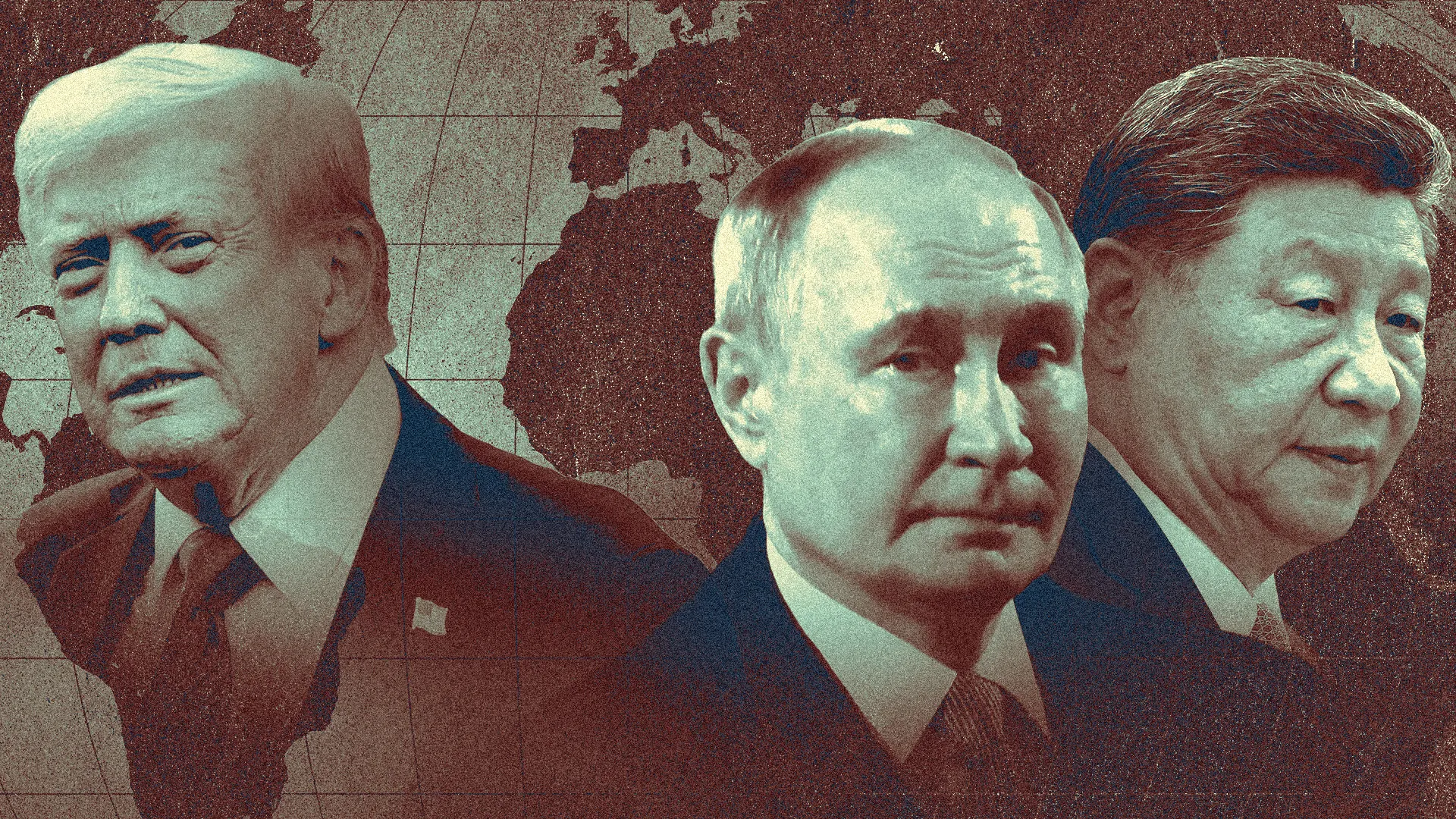
Russian President Vladimir Putin has reportedly proposed a summit with US President Donald Trump and Chinese President Xi Jinping to discuss ending the war in Ukraine, introducing a potentially consequential diplomatic initiative at a moment of mounting uncertainty over Western support for Kyiv.
According to reporting by The Wall Street Journal, subsequently carried by Reuters, Putin raised the idea during an October 9 telephone conversation with Trump. The proposed meeting could take place on the sidelines of the Asia-Pacific Economic Cooperation summit in Shenzhen, China, on November 18–19.
The initiative remains preliminary. Kremlin spokesman Dmitry Peskov acknowledged discussions about a possible meeting but indicated that neither the format nor the agenda had been settled. Trump has not committed to attending, and no formal three-way summit has been announced.
Nevertheless, the proposal has implications extending well beyond the possibility of another high-profile diplomatic gathering. It raises a central question about the direction of negotiations over Ukraine: could the conflict's future be shaped primarily through an agreement among Washington, Moscow and Beijing, rather than through negotiations in which Ukraine itself plays a central role?
A Diplomatic Format That Favors Moscow
The proposed trilateral arrangement would bring together the leaders of three major powers, each with substantial influence over international security, economic relations and the diplomatic environment surrounding the war.
For Moscow, such a meeting could provide several advantages.
First, it would elevate Russia's diplomatic standing by placing Putin alongside the leaders of the United States and China in discussions about one of Europe's most consequential security crises.
Second, it could broaden negotiations beyond the immediate battlefield, potentially linking the Ukraine conflict to wider questions involving sanctions, trade, energy markets and strategic competition.
Third, a summit conducted without Ukrainian or European participation could create opportunities for Moscow to press its preferred settlement framework before Kyiv and its European partners have a direct role in the discussions.
That outcome is not inevitable. Major-power consultations can sometimes help prepare the ground for more inclusive negotiations. But the composition of any negotiating forum matters, particularly when the sovereignty and territorial integrity of a country are at stake.
A diplomatic process that treats Ukraine primarily as the subject of negotiations, rather than as an indispensable participant, would face serious questions about legitimacy and implementation.
Why China Matters
China's inclusion is one of the most significant elements of Putin's reported proposal.
Beijing has maintained close political and economic relations with Moscow while presenting itself as a potential contributor to diplomatic efforts to resolve the war.
Its influence is different from Washington's. The United States has been a central source of military and diplomatic support for Ukraine, while China has maintained extensive economic ties with Russia and significant interests in preserving stability in global trade.
A three-way meeting could offer Xi Jinping an opportunity to demonstrate China's importance in managing major international crises.
However, Beijing would also face competing priorities.
China has an interest in maintaining its relationship with Russia, but it must also consider the economic importance of Europe and the potential diplomatic costs of appearing to endorse a settlement imposed on Ukraine.
Hosting a summit would therefore involve both opportunity and risk.
A meeting that produced meaningful progress toward ending the conflict could strengthen China's international standing. A process perceived as marginalizing Ukraine or disregarding European security concerns could instead complicate Beijing's relations with European governments.
Trump’s Diplomatic Calculation
For Trump, the proposed summit would offer another opportunity to pursue his stated objective of ending the Ukraine war through direct negotiations.
His administration's recent decisions have already altered the diplomatic atmosphere.
Washington's agreement to purchase Russian diesel and its decision to waive key sanctions affecting Moscow have generated criticism from Ukrainian President Volodymyr Zelenskyy, who argues that reducing economic pressure on Russia could strengthen Putin's position and prolong the conflict.
The administration, meanwhile, has presented engagement with Moscow as part of its broader effort to create conditions for a negotiated settlement.
A summit with Putin and Xi could reinforce Trump's preference for direct leader-level diplomacy. It could also expand the range of issues under discussion beyond the immediate terms of a ceasefire.
Yet the potential benefits would depend on the substance of any agreement.
A meeting among powerful leaders might generate political momentum, but it would not by itself resolve the territorial disputes, military arrangements and security guarantees that have repeatedly obstructed peace efforts.
Nor would a declaration by outside powers necessarily secure Ukraine's acceptance of the terms.
Ukraine’s Central Concern
For Kyiv, the most consequential aspect of the proposal is not simply who might attend the summit, but whether the discussions could establish expectations about a settlement before Ukraine has agreed to them.
Any durable agreement would have to address difficult questions, including the status of occupied territory, the withdrawal or deployment of military forces, future security guarantees and mechanisms for monitoring compliance.
These are not abstract diplomatic issues. They concern Ukraine's borders, its defense capabilities and the conditions under which its population would live after the fighting ends.
Ukraine has consistently maintained that decisions about its territory and political future cannot legitimately be made without its participation.
A summit excluding Zelenskyy would not automatically produce an agreement binding on Ukraine. It could, however, create diplomatic pressure if the participating powers emerged with a common framework and subsequently sought Kyiv's acceptance.
That possibility helps explain why the proposed format is likely to receive close scrutiny in Ukraine and across Europe.
Europe Faces a Strategic Test
European governments have substantial interests in the outcome of the war.
The conflict has transformed European defense planning, increased military expenditure and intensified debates over the continent's dependence on American security guarantees.
Any settlement affecting Ukraine would also influence the security environment of NATO's eastern members and neighboring states.
Yet the reported summit format does not include European leaders.
That absence would be politically significant if the meeting evolved from exploratory discussions into negotiations over substantive security arrangements.
European governments could support diplomacy aimed at ending the fighting while insisting that agreements affecting European security require meaningful European participation.
They would also have to consider how to respond if Washington pursued an arrangement that differed from their preferred approach to sanctions, territorial concessions or guarantees for Ukraine.
The proposal therefore highlights a broader question confronting Europe: how much influence can European states exercise over the continent's security architecture when the United States, Russia and China pursue direct strategic engagement?
A Summit Is Not a Peace Agreement
The reported initiative comes amid continuing military escalation.
Russian strikes have continued to hit Ukrainian cities and infrastructure, while Ukraine has conducted extensive drone operations against targets inside Russia.
The persistence of fighting underscores the distance between diplomatic proposals and a negotiated end to the war.
Even if Trump, Putin and Xi eventually meet, a successful summit would require more than agreement on the desirability of peace.
The parties would need to establish whether they share compatible objectives, whether Ukraine would accept the proposed terms and whether credible arrangements could prevent renewed hostilities.
China's presence might expand the diplomatic possibilities, but it would not eliminate the fundamental disagreement between Moscow and Kyiv over territory, sovereignty and security.
Nor would an agreement among three leaders automatically resolve Europe's concerns about the long-term consequences of a settlement.
The Wider Geopolitical Stakes
The proposed summit also reflects a broader struggle over how international security decisions are made.
Moscow has long sought recognition as a central power in shaping European and global security arrangements. Washington remains indispensable to NATO and the diplomatic efforts surrounding Ukraine. Beijing increasingly seeks a role commensurate with its economic and geopolitical influence.
A meeting among their leaders could be presented as an example of great-power diplomacy capable of addressing a major international crisis.
But it would also revive an enduring tension in international relations: the difference between agreements negotiated by powerful states and settlements accepted by the countries directly affected.
That distinction is especially important in Ukraine, where the conflict involves not only military control of territory but also the principle that states should determine their own political and security future.
For now, the proposed Trump–Putin–Xi summit remains an uncertain diplomatic possibility rather than an established peace process.
Its importance lies in the direction it suggests: Moscow appears interested in expanding negotiations into a forum dominated by the world's most powerful states.
The decisive test will be whether such diplomacy creates a credible path toward peace with Ukraine's participation—or merely shifts the negotiations to a table where Ukraine has no seat.
Sources
Follow our reporting: Add Faultline Brief as a Preferred Source on Google →