Israel Election 2026: How Netanyahu’s Fate Could Reshape Middle East Geopolitics and US Policy
Israel’s parliamentary election could influence US-Iran tensions, the Gaza conflict, Saudi-Israel normalization and regional security. But even a defeat for Benjamin Netanyahu may not fundamentally change Israel’s strategic direction.
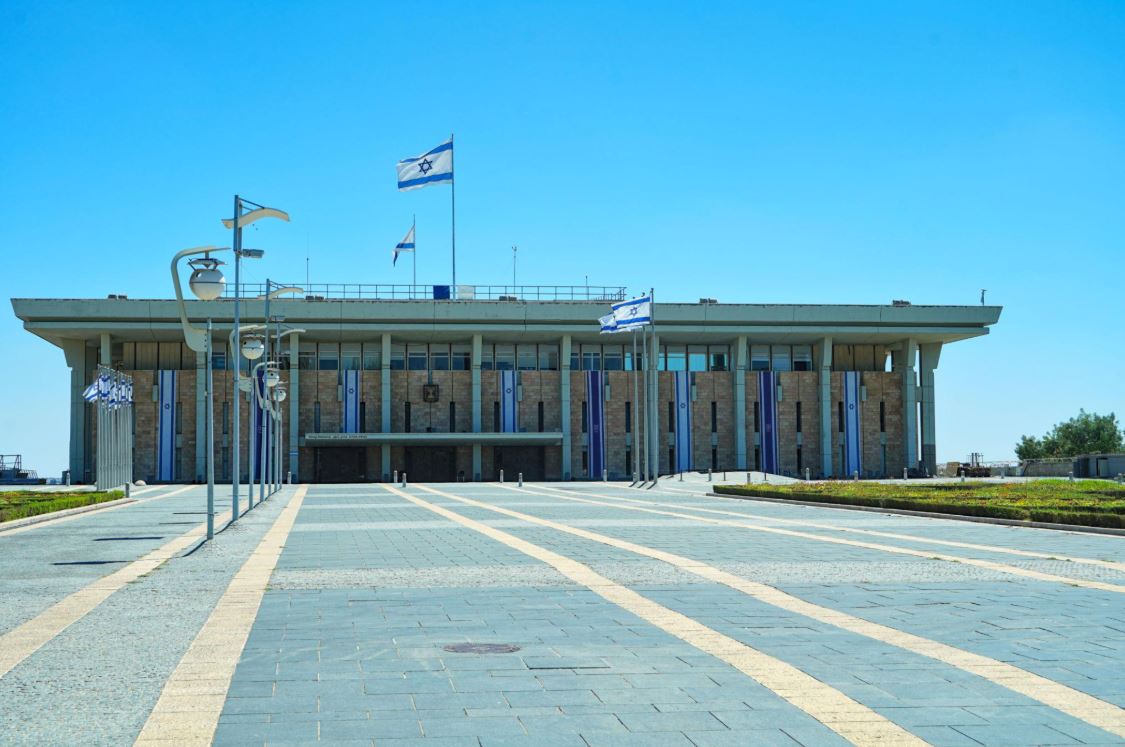
Israel's parliamentary election could have far-reaching consequences for Middle East geopolitics, US foreign policy, the confrontation with Iran and the future of Gaza. As Prime Minister Benjamin Netanyahu faces a challenge from an opposition led by former military chief Gadi Eisenkot, the outcome could determine whether Israel intensifies its military-centered security strategy or creates greater room for diplomacy with Washington, Arab governments and its regional adversaries.
The election comes after years of conflict that have transformed Israel's security priorities and relations with neighboring countries. Military operations involving Gaza, Lebanon and Iran have reinforced a more aggressive Israeli security doctrine, while disputes over Palestinian statehood and settlement expansion have complicated relations with European governments and Arab states.
For regional capitals, however, the most important question is not simply who becomes Israel's next prime minister. It is whether a new government would alter the balance between military action and diplomacy.
A New Government, but Not Necessarily a New Strategy
Israel's 120-member Knesset requires a governing coalition supported by at least 61 lawmakers. Opinion polls before the election indicated that neither Netanyahu's right-wing and religious alliance nor the fragmented opposition was assured of reaching that threshold.
Eisenkot's centrist Yashar party has emerged as a major challenger to Netanyahu's Likud. Other opposition forces include the alliance led by Naftali Bennett and Yair Lapid, Avigdor Liberman's Yisrael Beiteinu and Yair Golan's Democrats.
Although these parties differ on domestic governance and Netanyahu's leadership, many share a security-first approach toward Iran and Palestinian armed groups.
This creates an important distinction between political change and strategic change.
An opposition victory could produce a different diplomatic tone, greater engagement with Western allies and adjustments to Israeli policy in Gaza and the occupied West Bank. It would not necessarily end Israel's willingness to use military force beyond its borders.
Iran: The Most Important Regional Test
Iran is likely to remain the central strategic challenge for Israel regardless of the election result.
Netanyahu has consistently favored aggressive measures against Iran's military and nuclear capabilities. Another Netanyahu-led government, particularly one dependent on far-right coalition partners, could reinforce the preference for military pressure over diplomatic accommodation.
An opposition government might approach the confrontation differently, placing greater emphasis on coordination with Washington and limiting the risks of uncontrolled escalation.
However, Eisenkot and other opposition figures also regard Iran's nuclear and military capabilities as major security threats.
The difference could therefore concern the scale, timing and diplomatic management of military operations rather than whether Israel considers Iran an adversary.
For Tehran, this means an Israeli change of government would offer no guarantee of reduced pressure.
For Washington, it could nevertheless create an opportunity to influence how Israel responds to future crises, particularly when American officials favor negotiation or containment over a wider regional war.
Gaza and the Palestinian Question
The consequences for Gaza could be substantial, even without a fundamental shift in Israel's position on Palestinian statehood.
Netanyahu's government has faced international criticism over military operations, civilian casualties, humanitarian conditions and restrictions affecting the territory.
A new Israeli administration could seek closer cooperation with the United States, European governments and Arab mediators on reconstruction, humanitarian access and postwar governance.
It might also adopt a less confrontational approach toward international institutions and humanitarian organizations.
However, most major Jewish-led Israeli political parties remain opposed to Palestinian statehood under current circumstances.
This limits expectations that an opposition victory would immediately revive negotiations toward a two-state solution.
For Palestinians, the most meaningful changes may initially concern humanitarian conditions, military restrictions, reconstruction and the administration of Gaza rather than a breakthrough on sovereignty.
The West Bank Could Become a Decisive Difference
The occupied West Bank is another area where coalition composition could have major consequences.
Netanyahu's far-right partners have supported settlement expansion and policies that critics argue undermine the possibility of a future Palestinian state.
If these parties retain substantial influence, settlement activity and tensions with Palestinian communities could intensify.
A government less dependent on far-right factions might impose stronger restrictions on settler violence, moderate settlement policies or seek to reduce friction with European allies.
Such measures would not automatically reverse decades of settlement expansion.
Nevertheless, even limited changes could influence relations with Jordan, the Palestinian Authority and governments supporting a two-state solution.
The West Bank could therefore become one of the clearest indicators of whether the election produces meaningful policy differences.
Saudi Arabia and the Future of the Abraham Accords
Saudi Arabia and other Gulf governments are closely monitoring Israel's political direction.
The Abraham Accords established diplomatic relations between Israel and several Arab states, but normalization with Saudi Arabia remains a much more complicated prospect.
Riyadh has linked progress toward formal relations with Israel to credible movement on Palestinian rights and statehood.
A Netanyahu government dependent on hard-right parties would likely face considerable difficulty meeting those expectations.
An opposition-led administration might be better positioned to reopen diplomatic discussions, particularly if it demonstrates flexibility over Gaza's reconstruction and settlement expansion.
Yet improved diplomatic language alone would not resolve the fundamental disagreements.
Saudi Arabia must also consider domestic opinion, regional security concerns and its relationships with Iran, Pakistan, Turkey and Washington.
Consequently, a change of government in Israel could create diplomatic opportunities without guaranteeing a normalization agreement.
What the Election Means for Donald Trump and US Policy
For President Donald Trump's administration, the Israeli election could influence the management of several interconnected regional challenges.
Washington must balance support for Israel's security with relations involving Gulf partners, efforts to contain Iran and the need to prevent additional regional conflicts.
Netanyahu's reelection could strengthen an established political relationship but also generate disagreements if Israeli military decisions complicate American diplomatic initiatives.
An opposition-led government might offer Washington a different negotiating partner, potentially making cooperation on Gaza, Lebanon and regional security easier.
Still, Israel's strategic dependence on American military and diplomatic support would remain, regardless of who governs.
Likewise, the United States would continue to regard Israel as a major regional security partner.
The election could change the style and flexibility of bilateral cooperation more than the underlying alliance.
Lebanon, Syria and Turkey: Three More Pressure Points
The next Israeli government will also inherit unresolved security challenges involving Lebanon, Syria and Turkey.
In Lebanon, the central questions concern the durability of ceasefire arrangements, Hezbollah's military capabilities and Israel's willingness to withdraw from contested areas or reduce cross-border operations.
In Syria, Israel's security concerns intersect with regional competition and Turkey's expanding influence.
An administration emphasizing military deterrence could maintain or intensify operations intended to prevent hostile forces from establishing positions near Israeli-controlled territory.
A government prioritizing diplomatic coordination might pursue stronger deconfliction arrangements with regional and international partners.
Turkey presents a particularly complex challenge because Ankara is a NATO member with significant regional ambitions and a sharply critical position toward Israeli military operations.
Any improvement would likely require sustained diplomacy rather than simply a change of Israeli leadership.
Political Deadlock Could Prolong Regional Uncertainty
A third possible outcome is that neither major bloc secures enough parliamentary support to form a stable government.
Under Israel's proportional electoral system, smaller parties can determine whether a coalition reaches the required 61 seats.
The reluctance of major Jewish-led opposition parties to govern alongside Arab political factions could further complicate coalition negotiations.
A prolonged deadlock might leave Israel operating under a caretaker government or lead to another election.
Such uncertainty could limit the government's ability to make major diplomatic commitments while encouraging continuity in military and security policy.
For regional governments, political paralysis in Jerusalem could prove almost as consequential as a decisive victory for either camp.
Three Possible Regional Scenarios
If Netanyahu retains power with strong far-right support, Israel could continue an assertive military strategy, maintain pressure on Iran and pursue policies in the West Bank that complicate relations with Arab and European governments.
If Eisenkot or another opposition figure forms a government, Israel could seek to improve its international standing, coordinate more closely with Washington and create limited diplomatic openings concerning Gaza and regional normalization.
If neither bloc forms a government, prolonged coalition negotiations could delay diplomatic initiatives while existing security policies largely continue.
None of these outcomes guarantees peace or further war. Much will depend on developments beyond Israel's borders, including Iranian decisions, Palestinian politics, American policy and the actions of regional governments.
The Election Could Change the Region's Diplomatic Balance
Israel's election matters because its consequences extend well beyond the composition of the next Knesset.
The result could influence the prospects for US-Iran diplomacy, the future of Gaza, Saudi-Israel normalization, tensions in Lebanon and Syria, and Israel's relationships with Western governments.
Yet the strategic consensus that emerged in Israel after the October 7, 2023 attacks places limits on how dramatically any government is likely to change course.
The most realistic distinction may be between an administration that increasingly relies on military pressure and one that combines deterrence with greater diplomatic flexibility.
For the Middle East, even that difference could be significant.
The next Israeli government may not fundamentally redraw the region's geopolitical map, but its choices could determine whether existing conflicts become more entrenched or whether space emerges for negotiations.
Sources
Follow our reporting: Add Faultline Brief as a Preferred Source on Google →