Ethiopia–Eritrea Crisis Deepens as Border Fighting Raises Fears of Wider War
Rising tensions between Ethiopia and Eritrea threaten regional stability as unresolved border disputes, Tigray's fragile security and competing Red Sea interests raise fears of renewed conflict.
A dangerous escalation along Ethiopia's northern frontier
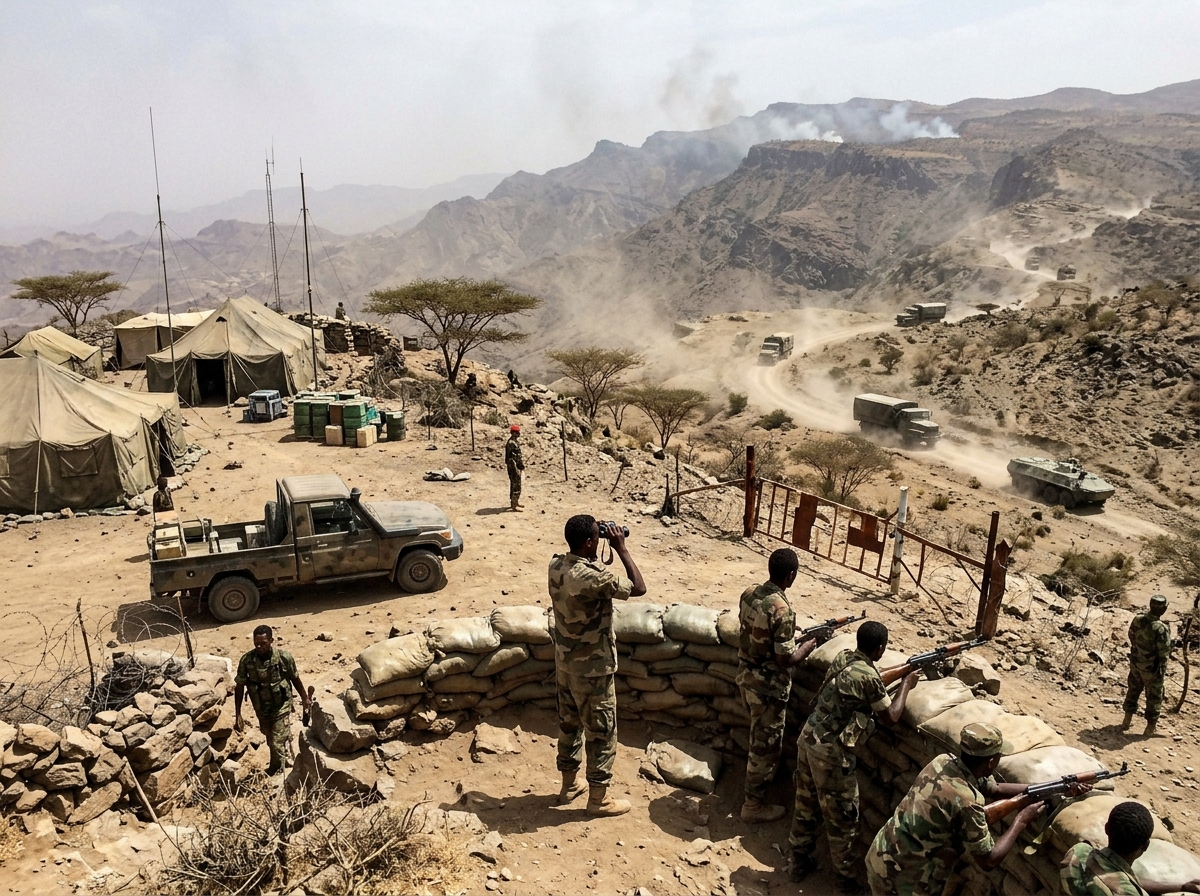
Ethiopia and Eritrea are facing one of their most serious confrontations in years, as competing accusations of cross-border military operations, renewed fighting in Tigray and appeals to the United Nations raise fears of a wider war in the Horn of Africa.
On October 10, Ethiopian government forces and allied militias entered Adigrat, a strategic city near the Eritrean border, according to residents cited by Reuters. Their arrival followed reports that Eritrean troops had moved into northern Ethiopia before withdrawing under pressure from Ethiopian drone strikes.
The situation remains contested. Ethiopia accuses Eritrea of sending forces into its territory, while Eritrea denies the allegations and says Addis Ababa is creating a justification for aggression. Reuters could not independently verify the alleged incursion or confirm full government control of Adigrat.
The uncertainty is itself dangerous: both countries are presenting their actions as defensive while military activity intensifies near a historically volatile border.
Rival appeals to the United Nations
Ethiopia has informed the UN Security Council that it is exercising its right to self-defense. Foreign Minister Gedion Timothewos alleged that Eritrean troops had advanced as far as 60 kilometres into Tigray, including mechanized units.
Eritrea has rejected the accusation. Foreign Minister Osman Saleh appealed to the Security Council for intervention, arguing that Ethiopia's claims could serve as a pretext for military action against Eritrea.
These competing diplomatic messages illustrate the widening gap between the two governments. Each portrays the other as the aggressor, making a negotiated de-escalation more difficult.
The Security Council now faces the challenge of encouraging restraint without accepting disputed battlefield claims as established facts.
Why Adigrat matters
Adigrat sits approximately 30 kilometres from the Eritrean border and occupies an important position in northern Tigray.
Control of the city and its surrounding routes matters because they connect border areas with the broader military and political struggle unfolding across northern Ethiopia.
Reports of drone strikes, troop withdrawals and advances by government-allied forces suggest that the confrontation cannot be understood as an isolated border incident.
It is unfolding alongside renewed fighting involving Ethiopia's federal government, the Tigray People's Liberation Front and other armed groups.
The Critical Threats Project assessed on October 9 that available evidence partially supported reports of Eritrean troop movements into Tigray, but it could not fully confirm those claims.
The legacy of two wars
Ethiopia and Eritrea fought a devastating border war between 1998 and 2000. A historic rapprochement in 2018 appeared to end decades of hostility and helped Ethiopian Prime Minister Abiy Ahmed secure the Nobel Peace Prize.
That reconciliation did not produce lasting strategic trust.
During Ethiopia's 2020–2022 Tigray war, Eritrean forces supported the Ethiopian federal government against Tigrayan forces. Relations subsequently deteriorated, while the 2022 peace agreement failed to resolve every political and security dispute affecting northern Ethiopia.
The latest escalation therefore combines several overlapping conflicts: Ethiopia's internal political struggle, its deteriorating relationship with Eritrea and competing regional security calculations.
A return to interstate war could transform these connected disputes into a much larger confrontation.
The Red Sea dimension
The conflict also carries implications far beyond Tigray.
Ethiopia became landlocked after Eritrea gained independence in 1993. Access to the sea remains a major strategic priority for Addis Ababa, while Eritrea regards control of its coastline and ports as fundamental to national sovereignty.
Ethiopian statements about obtaining sovereign access to the sea have heightened Eritrean concerns, particularly amid broader competition over Red Sea shipping routes and regional influence.
The dispute does not establish that war over a port is inevitable. It does, however, deepen mistrust at a moment when military tensions are already acute.
Why the crisis matters
A renewed Ethiopia–Eritrea war would carry serious humanitarian and geopolitical consequences.
Northern Ethiopia is still recovering from the destruction and displacement caused by the Tigray war. Additional fighting could disrupt essential services, force more civilians from their homes and obstruct humanitarian operations.
A broader conflict could also affect neighboring states and complicate security calculations around the Red Sea, one of the world's most strategically important maritime corridors.
The immediate question is whether diplomacy can prevent the border confrontation from becoming a sustained interstate conflict.
What happens next?
Three developments deserve close attention: whether military movements near Adigrat can be independently verified, whether Ethiopia and Eritrea respond to international calls for restraint, and whether fighting elsewhere in Tigray continues to spread.
The diplomatic exchanges at the United Nations will also matter, particularly if they create an opening for direct communication or mediation.
For now, the danger lies in a combination of unresolved grievances, competing claims and military operations occurring faster than diplomatic efforts can contain them.
Faultline Brief assessment: The Ethiopia–Eritrea confrontation is not simply another border dispute. It is a potential convergence of internal conflict, historical rivalry and Red Sea strategic competition. Preventing a wider war will require credible verification of events on the ground and a diplomatic path that addresses the security concerns of both governments.
Sources
Follow our reporting: Add Faultline Brief as a Preferred Source on Google →