Flight Bomb Threats Across Europe: Who Is Behind Them and Why Global Air Travel Is at Risk
Flight bomb threats across Europe have triggered emergency landings, airline diversions and major aviation security responses, raising concerns about the safety and reliability of international air travel. As investigators search for those responsible, the wave of anonymous airline bomb threats has exposed how coordinated hoaxes, possible hybrid warfare and security uncertainty could disrupt global aviation, increase airline costs and undermine passenger confidence.
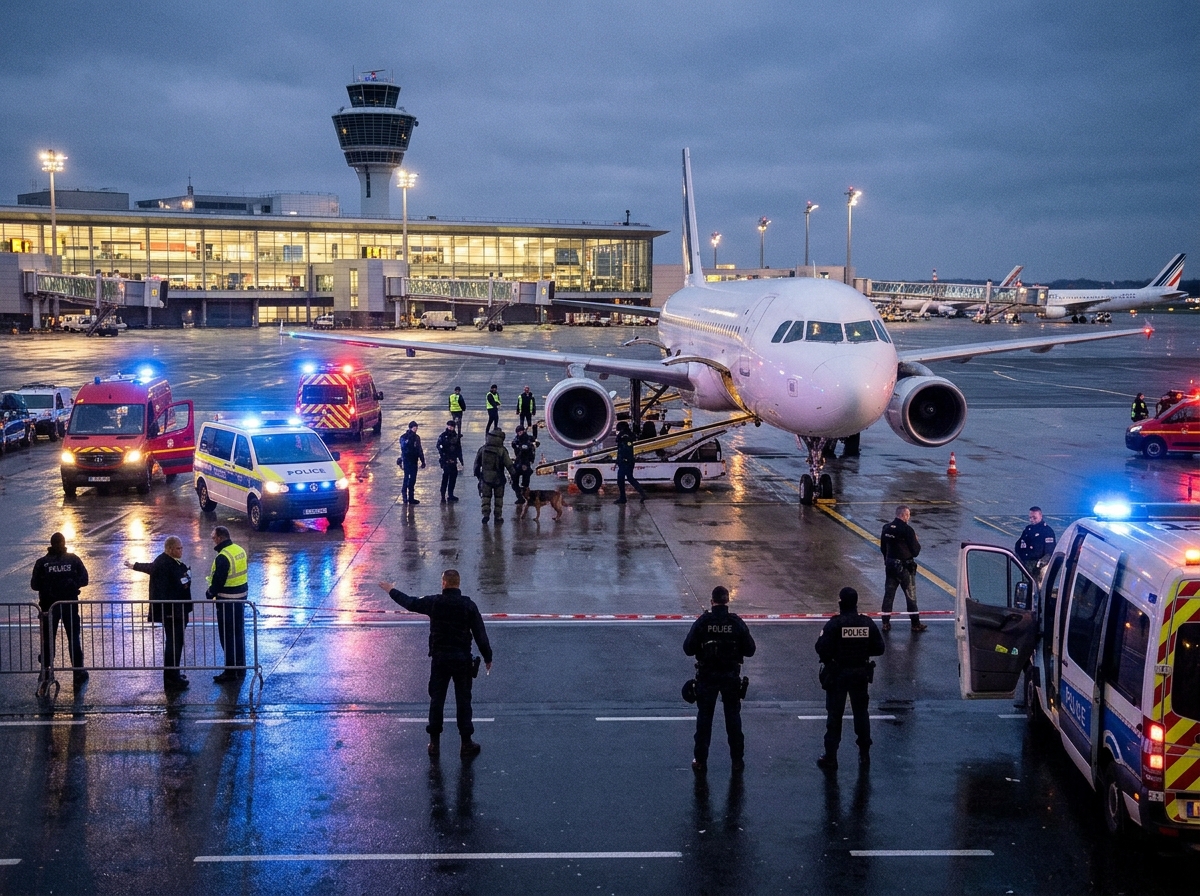
A wave of flight bomb threats across Europe has created a new security challenge for international aviation, forcing passenger aircraft to divert, prompting military escorts and disrupting travel across several countries.
At least 27 passenger flights were reportedly targeted on November 5 alone, according to Reuters. The incidents followed earlier warnings involving European airlines, including Ryanair, Wizz Air, Aer Lingus and LOT Polish Airlines.
Authorities have not publicly identified those responsible for the reported bomb threats, and no explosives have been found in the affected aircraft.
The incidents have nevertheless demonstrated how anonymous threats can disrupt airline operations without an actual attack taking place.
For millions of travelers, the central questions are increasingly urgent: Who is behind the European flight bomb threats? Are the incidents connected? Could similar threats spread beyond Europe? And how might repeated security disruptions affect global air travel?
The answers could have consequences for airline security procedures, international tourism, passenger confidence and the economic resilience of the aviation industry.
Europe Flight Bomb Threats Trigger Emergency Landings and Airline Diversions
The latest European aviation security incidents affected flights involving Italy, France, Ireland, Poland, Austria, Bulgaria and other countries.
An Aer Lingus flight traveling from Dublin to Rome was diverted to a French military air base after authorities received a bomb warning.
French fighter aircraft were deployed as part of the security response.
A Wizz Air flight from Milan to Warsaw was diverted to Vienna, while other European flights underwent additional security inspections.
The incidents involved several airlines operating across different national jurisdictions, complicating the task of determining whether the warnings originated from a common source.
European aviation authorities have been coordinating their responses, while police and security agencies investigate the messages.
Although the reported number of affected flights is relatively small compared with Europe's overall daily aviation traffic, the incidents demonstrate how security warnings can produce consequences across international airline networks.
A single diverted aircraft may affect subsequent departures, connecting passengers, airport resources and crew schedules.
Repeated disruptions can create broader operational problems even when every warning ultimately proves false.
Who Is Behind the Flight Bomb Threats Across Europe?
The identity of those responsible for the Europe flight bomb threats remains unknown.
Investigators are considering whether the incidents were organized by one individual, a coordinated group or unrelated actors copying earlier threats.
Several possible motives are being examined.
Some perpetrators may seek publicity or deliberately generate fear among airline passengers.
Others could be motivated by political grievances, ideological objectives or attempts to disrupt European transportation infrastructure.
Another possibility is that initial threats encouraged copycat incidents, making the overall pattern appear more coordinated than it actually is.
Some threatening messages reportedly invoked the name of a group associated with a Russian far-right extremist movement.
However, the authenticity of those claims has not been established.
A group being named in an anonymous warning does not prove that its members sent the message.
Investigators must establish the origin of the communications, identify any connections between incidents and determine whether a common motive exists.
Until reliable evidence emerges, attributing the airline bomb threats to any particular organization or government would be premature.
Could Flight Bomb Threats Be Part of Hybrid Warfare Against Europe?
The wave of airline bomb threats has renewed debate about hybrid warfare and European aviation security.
Hybrid warfare can involve activities such as sabotage, cyberattacks, disinformation and intimidation intended to undermine an adversary without relying exclusively on conventional military operations.
European governments have previously accused Russia of conducting hybrid operations against infrastructure and institutions. Moscow has denied involvement in such campaigns.
Those wider tensions provide geopolitical context, but they do not establish Russian involvement in the current flight bomb threats.
Security specialists have identified several possible explanations, including politically motivated disruption, criminal activity and copycat behavior.
A coordinated campaign against civilian aviation could potentially create economic costs, divert security resources and undermine confidence in public transportation.
Such disruption would not necessarily require an explosive device.
Instead, perpetrators could attempt to exploit the obligation of airlines and governments to respond seriously to credible warnings.
However, there is no verified public evidence that the current incidents are a state-directed hybrid warfare operation.
The distinction between a possible motive and a proven perpetrator is essential to understanding the aviation security threat.
How Flight Bomb Threats Disrupt International Air Travel
Modern international air travel depends on tightly coordinated schedules involving aircraft, crews, airports and passenger connections.
When a commercial airline receives a potentially credible bomb warning, the airline and relevant authorities must assess the threat and determine the appropriate security response.
Depending on the circumstances, an aircraft may divert to another airport, undergo additional inspections or continue to its destination under enhanced security arrangements.
An emergency diversion can affect much more than the original flight.
Passengers may miss international connections, aircraft may become unavailable for scheduled departures and flight crews may exceed their permitted duty hours.
Airlines may also need to arrange replacement aircraft, additional fuel, hotel accommodation and new travel itineraries.
These consequences can extend into subsequent days if aircraft and crews are unable to return to their planned schedules.
For international passengers, repeated flight bomb threats could mean longer delays, unexpected cancellations and uncertainty about onward travel.
For airlines, the incidents create an additional operational risk alongside severe weather, airspace restrictions, technical problems and geopolitical instability.
The Economic Impact of Airline Bomb Threats on Global Aviation
The financial consequences of airline bomb threats can be substantial even when investigators find no explosives.
Industry estimates cited in reporting suggest that a serious bomb-threat incident can cost an airline as much as $250,000, although actual expenses vary significantly.
Potential costs include additional fuel, airport landing fees, aircraft inspections, passenger accommodation, rebooking and crew replacement.
Governments may also incur expenses when police units, airport security personnel or military aircraft respond to warnings.
If repeated threats affect multiple airlines and airports, these costs can accumulate.
The international aviation industry is already exposed to fuel-price volatility, labor expenses, aircraft shortages and geopolitical disruptions.
A prolonged campaign of malicious warnings could introduce another source of financial uncertainty.
However, the current incidents do not establish that global airline ticket prices will increase.
Any broader economic impact would depend on how long the threats continue, how many flights are affected and whether the disruption spreads beyond the present locations.
The new fault line for global air travel is not only the threat of violence aboard an aircraft. It is the ability of unidentified actors to exploit the aviation industry's necessary security precautions, turning uncertainty into a tool capable of disrupting international travel.
Sources
Follow our reporting: Add Faultline Brief as a Preferred Source on Google →